
THANK YOU FOR SUBSCRIBING

Pharma Tech Outlook Weekly Brief
Be first to read the latest tech news, Industry Leader's Insights, and CIO interviews of medium and large enterprises exclusively from Pharma Tech Outlook
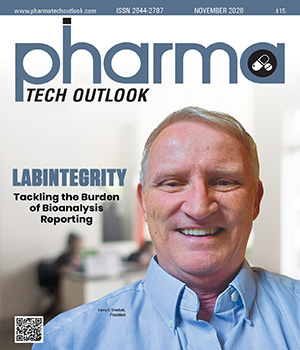
The work of a GLP bioanalysis lab sits at the heart of drug development. Each study generates large volumes of data that must be transformed into formal reports before regulator review. Chemists configure studies inside Watson LIMS, run assays, and produce data. Report writers then step in to collate information, retrieve tables, and copy values into Word templates to generate method validation reports and sample analysis reports, which later move through rounds of review. This workflow, while established, creates significant friction. Data must be pulled from Watson in formats that require manual adjustment. Templates are often scattered across network folders, slowing access. Copy-paste transfers introduce the risk of error, forcing quality control reviewers to check line by line. As a result, reports that should move quickly can stretch into months. LabIntegrity was created to close these gaps. The company brings decades of experience in laboratory informatics and developed StudyDoc, a system that connects directly to the Watson Oracle database, structures the data, and delivers ready-to-use drafts. What once stalled in manual transfers now flows faster and more accurately, giving labs a path to quicker, regulator-ready reporting while easing the quality control burden that previously weighed teams down. “StudyDoc is true off-the-shelf software, unlike rigid tools. It adapts to any workflow and can generate full or partial reports, giving labs flexibility competitors cannot match,” says Larry E. Elvebak, president. StudyDoc: Practical Automation for Bioanalysis Reports StudyDoc works directly with Thermo Scientific Watson LIMS, the industry standard for bioanalysis study design and compliant data storage. The software retrieves raw study data from the Watson Oracle database, generates properly formatted tables, enters in the report body table
Steve Madsen, CEO
Serialization in the pharmaceutical industry isn’t just about regulatory compliance—it’s about ensuring patient safety and supply chain integrity. However, achieving compliance can be challenging, as companies often struggle with fragmented systems, data inconsistencies, and the complexity of global regulatory requirements. Many businesses rely on separate serialization solutions that do not integrate with their ERP systems, leading to inefficiencies and gaps in tracking. This is where RxERP changes the game. As the sole provider of a serialized ERP system, RxERP is a trusted partner for pharmaceutical companies seeking an industry-specific, cloud-hosted platform to automate drug serialization and tracking across the supply chain. The platform’s distinctive framework embeds serialization directly into the core ERP system, streamlining compliance, improving visibility, and enabling accurate, real-time data exchange across the supply chain. “Our platform helps ensure adherence to regulations like the Drug Supply Chain Security Act (DSCSA), minimizing risks and maintaining the highest standards for manufacturers, wholesale distributors, and 3PL providers,” says Steve Madsen, CEO of RxERP. This platform additionally features licensure verification, inventory and warehouse management, CRM, and a white-label e-Commerce solution equipped with PCI-compliant checkout capabilities. By consolidating these capabilities into a single system, RxERP eliminates inefficiencies caused by disconnected solutions, allowing pharmaceutical companies to manage end-to-end supply chain operations seamlessly. For pharmaceutical companies, compliance challenges range from product serialization and traceability to maintaining data integrity and regulatory reporting. RxERP addresses these concerns by ensuring that each drug package remains distinctly identifiable throughout its journey, preventing counterfeit products from infiltrating the market. The system safeguards data accuracy regarding product movements, expiration dates, and inventory levels to prevent the distribution of expired medications. It also streamlines regulatory reporting by automatically generating and submitting essential documentation to authorities like the FDA, simplifying an otherwise complex and time consuming process.


Exouza offers OpenPBM.ai, a next-generation pharmacy management administrative platform that empowers employers to better manage rising costs and navigate the complexities of the healthcare ecosystem. By combining intelligent technology, white-glove service and radical flexibility, it drives tangible financial savings, stronger employee engagement and a healthcare experience aligned with current expectations. This forward-thinking solution comes at a critical time. Pharmacy costs are now one of the largest drivers of healthcare spending, and can account for 25 percent of an employer’s total costs. Despite this, traditional pharmacy benefit managers (PBM) continue to rely on outdated, rigid, and opaque models that offer limited transparency, minimal control and little influence on outcomes. Compounding the issue is the high cost of specialty drugs. Although used by only about three percent of the population, the high price of these medications means they account for over half of total drug spending. Much of the complexity and inefficiency surrounding drug pricing is the widely used practice of negotiated rates between PBMs and pharmacies. But this practice does not provide real-time, market-based pricing across a variety of prescription drug suppliers. OpenPBM.ai is the first PBM platform that “shops” for the best price for prescription drugs from multiple sources, not just a contracted rate with a pharmacy, delivering unmatched value to both employers and employees. “Nearly every other industry allows shopping for prices with fully transparency to buyers. Now for the first time, Exouza brings this experience to prescription drug pricing and management. We saw the growing gap and approached it with a blank canvas,” says Susheel Jain, CEO. Rather than adapting outdated systems OpenPBM.ai was built from scratch as a modern, agile, and data-driven PBM platform. Its intuitive app and portal—covering administration, finance, access, clinical management and customer service—are designed with an open architecture to integrate best-in-class capabilities, giving customers the flexibility and customization they need now and in the future. Integration and interoperability with vetted partners and third party systems enables smooth data flow and real-time tracking of member and drug status at every stage. If an issue arises with one partner, OpenPBM.ai immediately identifies the next best route and guides the member to an alternative program or solution, ensuring continuity and support.
Pharma Consulting

James Riddle, MCSE, CIP, CPIA, CRQM, Senior Vice President - Global Review Operations, Advarra
Pharma Manufacturing

Diane Paskiet, Director of Scientific Affairs, West Pharmaceutical Services
Pharma Manufacturing

Armand Matejunas, Sr. Director, Clinical Data Operations, Pacira BioSciences, Inc
Pharma Consulting

Tiffany Anderson, Senior Manager, Global Quality Compliance, Nelson Laboratories, LLC
Pharma Manufacturing

Yan Zhi, Ph.D. Director, Cell & Gene Therapy Product Owner, CSL Behring

eClinical Trial Management
Haichen Yang, MD, MA, MBA, Vice President, Clinical Research, Amicus Therapeutics Inc [NASDAQ: FOLD]

Pharma Consulting
Jennifer Perrin, Director, MMS Holdings Inc
Pharmacy is evolving through AI, data science, and precision medicine, redefining education and empowering pharmacists for personalized, technology-driven healthcare.
ESG principles to reduce environmental impact, improve social equity, and enhance governance transparency. This shift drives innovation, builds stakeholder trust, and ensures long-term value for society and business.
The Modern Approach to Pharma Technology and Compliance
Three areas are shaping the conversation: technology-agnostic advisory services, advanced drug safety and compliance management solutions, and the development of dietary supplements that meet both market demand and stringent regulatory standards.
One persistent challenge is complexity. Modern product pipelines span continents, technologies, and therapeutic areas. Agnostic advisory services are emerging as a vital bridge—helping organizations evaluate and integrate solutions without being locked into proprietary platforms. This flexibility is critical as new modalities move into mainstream pipelines, from cell therapies to mRNA-based treatments.
Drug safety and compliance management face pressures. Regulatory bodies worldwide are raising the bar on traceability, adverse event monitoring, and post-market surveillance. Automation, AI-enabled data analysis, and unified reporting frameworks are now essential to keep pace. However, technology alone is insufficient—solid processes and cross-functional alignment remain indispensable.
In dietary supplements, innovation is accelerating, but so is oversight. Demand for natural, functional, and personalized products continues to grow, creating opportunities for companies combining rigorous scientific validation with speed-to-market strategies. Technology-enabled development platforms are proving invaluable, supporting formulation, quality control, and compliance from concept to shelf.
This issue features contributions from leading organizations that are making an impact in these arenas. Companies like Charles River Laboratories and Nelson Laboratories, LLC exemplify how scientific expertise, quality systems, and adaptive technology come together to address emerging industry needs.
The future of pharma will be shaped by those who can unite innovation with compliance, and speed with scientific rigor. Success will come to those companies that turn regulatory demands into competitive advantages and evolve technology into opportunities for better outcomes, setting new standards for the entire industry.