
THANK YOU FOR SUBSCRIBING

Pharma Tech Outlook Weekly Brief
Be first to read the latest tech news, Industry Leader's Insights, and CIO interviews of medium and large enterprises exclusively from Pharma Tech Outlook


 Marc Berridge, President
On the research and development side, genomic testing helps drug developers predict how well drugs will hit their targets based on pharmacogenomic parameters. An effective option is to radiolabel the drug and use molecular imaging to measure regional pharmacokinetics in selected populations.
On the treatment side, it can be used to predict the potential benefit that patients can gain from the treatment. For example, [F-18] fluoroestradiol is an imaging agent used with positron emission tomography (PET) to detect if breast tumors and their metastases are estrogen-positive. This helps determine anti-estrogenic therapy. Similarly, a radiolabeled diagnostic antibody can be used to measure targeting effectiveness (and dosimetry) before using the same antibody for immunotherapy or radioimmunotherapy.
By working with clients to radiolabel and image their products for preclinical and clinical research, and clinical trial applications, 3D Imaging provides them with the ability to make these determinations. The company is focused on advancing the state of health care through innovation in the application of radiochemistry and imaging in research and development, and in manufacturing and distribution.
Information produced by 3D Imaging can be used to direct formulation development, identify effective populations, and most importantly, determine the efficacy of potential drugs, before their clinical trials.
3D Imaging spun out from an academic laboratory conducting fundamental research projects for the pharma industry. Over the years, the company has expanded its capabilities to support clients in every stage of drug development, providing expert assistance with early preclinical development, formulations, dosing, clinical pharmacokinetic and pharmacodynamic trials, and post-marketing studies. It also offers regulatory support and helps clients with research and custom manufacturing of finished radiopharmaceuticals.
Effectively Navigating Through Challenges
Leveraging molecular imaging for drug development is a multi-disciplinary endeavor requiring genomics, biochemistry, radionuclide production and radiochemistry, and nuclear medicine imaging. Consequently, it becomes challenging to assimilate these capabilities in-house to drive improved drug development projects.
To redefine this paradigm, 3D Imaging provides transition capabilities for radiolabeling and imaging applications to developmental and clinical products in a custom-designed manner. With a network of collaborative relationships with other companies and academic medical institutions, they also provide the expertise required to move products rapidly into imaging evaluations.
In addition, it works with clients to radiolabel and image their products and helps determine the efficacy of specific therapies on certain populations. The resulting information can be used for direct formulation development and modification when proposed drugs are ineffective before the clinical trial stage.
Cutting-Edge Capabilities to Radiolabel Proprietary Molecules
We have radiolabeled all types of molecules from small metabolites through small molecule drugs—sugars, fatty acids, nucleic acids, steroids,and peptides, up to proteins, antibodies, nanoparticles, microbubbles, dendrimers and other compounds of interest in applications for neurology and psychiatry, cardiology, and oncology
An in-house cyclotron is used for the production of radionuclides for use in labeling for drug development. The company produces numerous positron-emitting radionuclides for imaging using PET scanning: fluorine-18, zirconium-89, copper-64, iodine-124 and the SPECT imaging nuclide iodine-123. This provides efficiency and flexibility for development work and for manufacture of products radiolabeled with them.
3D Imaging has the ability to purchase radionuclides from third parties for use in custom radiolabeling work. Some of the radiopharmaceuticals they produce, such as [I-124]FIAU, which can measure infection, have general applicability for drug evaluation. They also radiolabel client’s proprietary molecules or tracers chosen to measure the pharmacodynamics of those molecules. This custom service approach provides precise information for different applications.
In addition to pharmacogenomic applications, regional pharmacokinetics measurements are often excellent means to evaluate and compare a drug’s delivery effectiveness, as are pharmacodynamics to assess the ability to hit its target.
“The only limit to the potential of the technique is our imagination and ability to select appropriate radiotracers to make the needed measurements,” says Berridge.
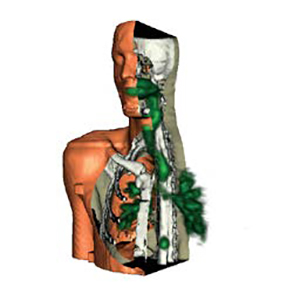
Since the beginning, 3D Imaging has proactively evaluated numerous commercial inhaled pharmaceuticals. These studies assess the effectiveness and penetrations of radiolabeled active ingredients to demonstrate the comparative effectiveness of different drugs, formulations, propellants, particle sizes, and delivery devices. This permitted clinical optimization, enabled regulatory approvals, and proposed improvements to clinical products. It also helped in securing regulatory approvals and patent defense litigation.
3D Imaging sets the standards by offering the highest quality of I-124 and Zr-89 used in contract labeling and manufacturing. It delivers them to clients who perform their own in-house radiolabeling for pharmacokinetic and pharmacogenomic studies. Having radiolabeled hundreds of molecules, including custom biologics, it has created an effective approach to producing quality, injectable, custom-radiolabeled products, adhering to short timelines. 3D Imaging’s streamlined approach also limits costs and offers an effective product marketing method.
“While pharmacogenomics is a hot area of application for molecular imaging, our technique of measuring targeted regional pharmacokinetics and pharmacodynamics can be profitably applied in every phase of drug development, from preclinical to postmarketing,” says Berridge.
Company
3D Imaging
Management
Marc Berridge, President
Description
3D Imaging has the ability of assisting with early preclinical through first in man, formulations, dosing, clinical pharmacokinectic, and pharmacodynamic trials to post-marketing studies of the final formulation. It also provides customized research services, custom manufacturing of finished radiopharmaceuticals, GMP manufacturing for clinical trials and approved clinical products, and complete regulatory support for clients’ studies.


