
THANK YOU FOR SUBSCRIBING

Pharma Tech Outlook Weekly Brief
Be first to read the latest tech news, Industry Leader's Insights, and CIO interviews of medium and large enterprises exclusively from Pharma Tech Outlook


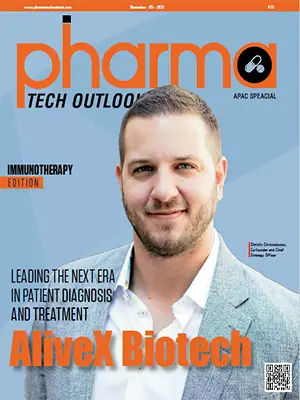
 Dimitris Christodoulou, Co-founder and Chief Strategy Officer
Imagine trying to understand music by simply listening to audio clips from an unknown song, one instrument at a time. Seems difficult, right?
Yet for most life science researchers, this is the kind of complexity they face when trying to understand a disease or the underlying biology behind an experimental observation. Scientists and researchers often spend the majority of their careers striving to develop effective drugs to combat the most challenging diseases. Typically, the discovery of therapeutics has been based on the development of highly selective chemical compounds that target a single biological entity or pathway which is believed to be the dominant player for a certain pathology. While this single-target drug strategy has had many successes for the pharma industry over the years, it is becoming increasingly clear that it may not be the right strategy to achieve a fast and enduring therapeutic effect for some of the most complex diseases we face, such as cancer and autoimmune disorders in which the pathogenesis is dependent on a set of biochemical events and several bioreceptors operating concomitantly. The immune system is involved in the majority of human diseases and its homeostasis is extremely critical: when it “underperforms” the probability of cancer rises dramatically, whereas when it “overworks” it can lead to autoimmune diseases.
Human biology and the intricate immune system, in particular, need to be approached as a system, with multiple targets, in order to beget a sufficiently efficacious treatment.
In addition, research data that is primarily based on cell lines and animal studies often do not translate to human trials, leading to rather low success rates and large inefficiencies in the development of new therapies.
In other words, one of the keys to advancing human health through early and accurate diagnosis and individualized treatment lies in the accurate decoding of the human immune system. “But to adequately understand and engineer the immune system, sequencing data alone is not enough. It is important to generate and use multi-omics data (e.g. proteomics, metabolomics) to better understand the immune system and its role in diseases of interest if we want to make significant improvements in R&D success. This is where we come in.” says Dimitris Christodoulou, co-founder and chief strategy officer of AliveX Biotech, a mission-driven biotechnology company that is pioneering solutions for the most pressing immunology-driven clinical challenges.
How does the company do this?
“We are here because we want to change the paradigm of how life science research is done. We want to move away from the limited single-molecule-oriented view and focus on a systems-view that can significantly improve the efficiency of R&D. We target the immune system, which we believe is one of the fundamental pillars of the present and future of life sciences,” adds Dr. Christodoulou. AliveX generates and combines multi-omics data, with computational biology and machine learning, to decode the human immune system and identify new biomarkers and therapeutic targets in oncology and auto-immune diseases, with higher precision and success probability.
AliveX offers a namesake end-to-end, integrated, AI immunology platform for advanced biomarker discovery and target identification.

Decoding the human immune system to lead the next era in diagnosis and patient treatment.
“Human-based” Data-driven Target and Biomarker Discovery Ensures Success
Elucidating on their core differentiators, Dr. Christodoulou says, “We bring two main value-adds to the table: human data and a proprietary end-to-end computational platform. On the data side, we collect samples directly from patients and healthy individuals and derive our unique insights on novel biomarkers and drug targets primarily based on data from these samples, giving us a higher chance to go ‘from bedside to bedside’ with our solutions. Typically, companies work with cell lines or animal models, which have their own advantages but also disadvantages. While we also work with cell lines and animal models to validate some of our hypotheses, the genesis of our hypotheses and understanding of how the immune system operates is derived directly from our analyses of human samples.” AliveX’s vast and unique ecosystem of clinical partners enables the team to obtain the right volume and very high quality of patient samples. What’s more, AliveX has access to more patient samples at a fraction of the cost and time needed compared to the global competition, thus enabling the faster and cost effective execution of research projects.
On the technology front, the firm initially consolidates all the data they have, both proprietary and public, into their immune system knowledge graph—a unique resource that enables new insights through the integration of multiple sources of information into a graph where biological entities such as cells or cytokines are presented as nodes and their relationships as edges. By combining AI, integrative multi-omics analysis and other core computational technologies with multi-omics data generated in-house, AliveX rapidly moves through the stages of biomarker discovery, patient stratification and target identification. “We use our technology platform to enable more precise treatment development with higher probability of clinical success, while decreasing the needed time and cost. One of our biggest assets in this process is the development of ‘digital twins’, digital models of pathways, cells, or relevant tissue using our knowledge graph as the foundation. The digital twin allows us to generate hypotheses at scale, extremely efficiently. By doing so, we derive new insights, faster and cheaper than we would do otherwise. These insights are then funnelled into our in-silico, in-vitro, in-vivo validation cycle, where we validate or disprove the hypotheses and determine the right pathways and mechanisms for potential drug development. Fusing such technologies with our proprietary data and applying it to patient cohorts or even individuals, we can reach a true individualized diagnosis and treatment—true precision medicine,” mentions Dr. Christodoulou. “What’s unique about this is it’s done in a quick and cost-effective manner. The combination of integrative multi-omics analysis with digital twin hypothesis generation capabilities ensures a deeper and faster understanding of the underlying biology, enabling us to bring forward significant value to our partners by ensuring the high success rate of research projects.“
AliveX is the first company in China and one of the few in the APAC region with the capability to combine multi-omics data, AI, and digital-twin-based hypothesis generation for biomarker and target research and discovery. Traditionally, most companies focus on lead optimization and design or small molecule engineering.
Under the Hood of Excellence
A notable aspect of AliveX is the modular approach it follows. “We are a platform that not only generates IP but also co-creates new treatments, drugs, and diagnostics. We also have a service arm that can generate high-quality multi-omics data for our partners. Using our bioinformatics capabilities and our platform for high-end analytics, we offer our clients an end-to-end solution. Beyond this, we identify—through collaborations and our own projects—novel biomarkers and targets, develop new hypotheses, and go through the validation cycle, all in one place,” asserts Dr. Christodoulou. “This modularity translates into many co-development deals, where we typically get a share of the asset that is under development. Our ability to generate significant value, following a systems immunology approach, is where our strength is.”
The firm’s world-class, experienced, interdisciplinary team also plays an increasingly important role in AliveX’s continued success. “To be at the forefront of computational systems biology and immunotherapy solutions, you need experts from multiple disciplines on the team; and they are not always easy to find. Despite the fact that we are still a relatively young company, we have assembled a team of leading experts in their fields who are the driving force of the company,” underscores Dr. Christodoulou. AliveX is led by a seasoned core team: Shirley Wen, the founder and CEO of AliveX, is an investor and entrepreneur with over 10 years of interdisciplinary product and managing experience, transforming traditional businesses with frontier digital technologies. Chief Scientist Douglas McCloskey, on the other hand, is a systems biologist experienced in developing big omics data generation and analysis workflows, with more than 10 years of stellar work as a group leader at the Technical University of Denmark and as a researcher at UCSD.
Transforming Life Sciences Research As We Know It
Bearing testament to AliveX’s competency is its success stories with numerous clients and clinical partners. In a recent instance, the firm was able to stratify patients as either responders or non-responders to a certain treatment by evaluating the patients’ immune system level response to the therapy using liquid biopsy and multi-omics data. In a second case, working with already stratified patients, AliveX used its digital twin models to identify potential combination therapy targets that increased the cytotoxicity of a certain cell therapy, making it more efficacious. This target was validated in-vitro, in vivo, and recently validated in a small scale investigator initiated clinical trial. AliveX managed to successfully complete this first phase of the project in under 7 months, demonstrating that its pioneering approach can yield valuable outcomes up to 5-10 times faster than traditional approaches and at less than one twentieth of the cost you would typically expect for such a project.
Founded in 2019, the company already has presence in five locations: headquarters in Shanghai, clinical lab in Beijing, and teams in Oxford, Copenhagen, and Zurich. AliveX is currently on a growth trajectory and has raised more than $10 million. Right now, the firm is interested in exploring strategic partnerships with academic institutions, biotechnology and pharmaceutical companies to further unlock biomedical insights and advance patient treatment.

Company
AliveX Biotech
Management
Dimitris Christodoulou, Co-founder and Chief Strategy Officer
Description
AliveX Biotech is a mission-driven biotechnology company that is pioneering solutions for the most pressing clinical challenges. The namesake end-to-end, integrated, AI immunology platform generates and combines multi-omics data, with computational biology and machine learning, to decode the human immune system and identify new biomarkers and therapeutic targets in oncology and auto-immune diseases. By combining different types of omics information ranging from transcriptomics, metabolomics, fluxomics, and proteomics through its multi-omics platform, AliveX empowers the systemic understanding of the immune system. AliveX transforms the expansive and complex multi-omics data that it generates into knowledge and insights through its proprietary knowledge graph, data intelligence, AI and computational modelling pipelines to ultimately reach a deep, mechanistic understanding of complex phenomena and uncover the ‘invisible’ mechanisms governing them