

THANK YOU FOR SUBSCRIBING

Pharma Tech Outlook Weekly Brief
Be first to read the latest tech news, Industry Leader's Insights, and CIO interviews of medium and large enterprises exclusively from Pharma Tech Outlook


 Zhi (Zak) L. Chu, Ph.D. Founder, CEO & CSO
As the cancer research field has become crowded over the past decade, numerous new targets aiming at cancer immune escape have been discovered, but the majority focuses on targets such as PD-1, PD-L1, Tim3, and Ctla-4. These targets have seen immediate success due to their critical role as immune check-point important in maintaining immune functions and regulating them, and because cancers hijack these targets to evade anti-cancer immune attack. Inhibitory antibodies to these targets, called check-point inhibitor (CPI), have brought revolutionary therapies to cancer patients in the past decade. However, tumor cells evolve to acquire multitude pathways to evade patients’ immune surveillance, and current CPI is not an one for all solution to treat all kinds of tumors, and the existing targets are difficult for more affordable small molecule drug development. Discovery of novel targets in the immune system that uniquely communicate with tumor is critically important for the development of a whole new generation of anti-cancer immune therapies.
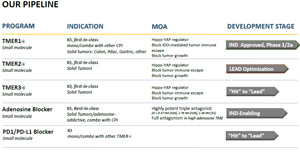
Propelling forward these extensive research initiatives in cancer treatment is the biotech company, Crossignal Therapeutics. Built on the foundation of novelty, the company is developing a new generation of small molecule anti-cancer immunotherapy, which helps in unleashing potent and targeted immune responses against malignancies with a more precise and effective approach to combating cancer.
“We focus on the discovery of immune cell-expressed, tumor microenvironment factors (TME)-targeted GPCRs (TMERs) and design our drug candidates by testing their ability to inhibit critical pathways in TME-mediated cancer immune escape. We are driven by our deep-rooted experience in immunology & oncology, GPCR signal transduction, and drug discovery to develop a whole new generation of IO therapeutics,” says Zhi (Zak) L. Chu, Founder, CEO & CSO, Crossignal Therapeutics.
TMERs For Innovative Medicine
The unique microenvironment (TME) generated by tumor serves as a niche for cancer to elude the body’s immune defenses. Within this context, tumors exploit TME factors to interact with receptors (TMERs) on immune cells, evading anti-tumor immune surveillance. G-protein coupled receptors (GPCRs), a crucial class of TMERs, influence the differentiation, development, and function of both innate and acquired immune systems, playing a pivotal role in inflammatory, autoimmune, and cancer-related diseases. Depending on GPCR subtypes and intracellular signalling pathways, engagement by a TME factor can lead to the inhibition of tumor-killing immune cells or the induction of immune suppressive cells, all in favor of tumor survival and growth in the patient’s body.
Crossignal Therapeutics is distinguishing itself in two aspects. First is identifying a novel target that carries biologically meaningful objectives, and the second is concentrating on the development of small molecules that specifically target these receptors.

The Company Is Developing A New Generation Of Small Molecule Anti-Cancer Immunotherapy, Which Helps In Unleashing Potent And Targeted Immune Responses Against Malignancies With A More Precise And Effective Approach In Combating Cancer
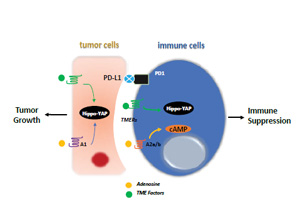
The pivotal decision to start the company was fueled by the recognition of a single pathway called the Hippo-YAP pathway. In this context, Hippo is a tumor suppressor, whose function is to prevent YAP, the oncogene, from activation. This pathway has been shown to be important for tumorigenesis, but since 2018, animal studies have shown that this pathway is also essential for tumors to escape immune attacks. When YAP is removed from the immune T lymphocytes, the tumor cannot escape the attack anymore, and the immune system will beat it up with ease. Thus, by blocking YAP activities in the tumor cells and in the immune cells, an inhibitor of YAP would achieve a “two-punch” action on tumors: preventing tumor growth and inhibiting tumor immune escape. However, a global inhibition of YAP in a human body is not desired because Hippo-YAP pathway is important for many other bodily functions. The key is Hippo-YAP precision targeting by using precision medicine.

Explaining this research, Chu elaborates that “The fundamental research revolves around connecting two dots, first is the pathway crucial for cancer development and resistance to immune attacks, and understanding what drives the abnormal regulation of this pathway in the tumor setting being the second. Identifying the receptors engaging this pathway and developing drugs to block it, forms the core of the company’s efforts.”
Operating as a research and development company, Crossignal Therapeutics recognizes that drug development requires a multidisciplinary approach with upfront investment.
To resolve this challenge, it adopts a strategic approach, where it selectively identifies and utilizes various tools and external services, which allows it to focus on main functions in innovation.
Availing these services, Crossignal Therapeutics places importance on its capability in understanding pathways, identifying targets, and mastering critical aspects of drug development, particularly compound design and pharmacodynamic mechanism of action studies.
It conducts a deep analysis in understanding the communication between the tumor and the immune system. In another word, identifying the radio receivers (receptors) of the immune system that receive the signals coming from the tumor and the tumor microenvironment becomes crucial. After this, small molecule blockers can be discovered by cutting off the communication lines from the tumor to immune cells.
Furthermore, the company’s key development, pathway precision screening platform—linked to the Hippo-YAP pathway—serves as a tool to precisely track signaling within cells, offering a way to test compounds and monitor their impact on the pathway. The platform aids the tracking of compounds in vitro assays, giving rise to what it terms as precision pathway practicing molecules.
Since its startup in 2019, the Company has validated several novel targets and has built a rich R&D pipeline. In the coming days, Crossignal Therapeutics is set to commence its inaugural clinical trial addressing the critical issues surrounding colon and pancreatic cancer—a substantial unmet medical need.
Leveraging extensive expertise in medicinal chemistry and small molecule drug development, Crossignal Therapeutics is strategically positioned to accomplish its mission of introducing a new era of transformative medicine for cancer patients. Specializing in innovative targets and the creation of small molecule immunotherapies, the company is at the forefront of advancing precision medicine, with a commitment to delivering cost-effective cancer treatments.

Company
Crossignal Therapeutics
Management
Zhi (Zak) L. Chu, Ph.D. Founder, CEO & CSO
Description
Crossignal Therapeutics pioneers novel small molecule immunotherapies, targeting key receptors like GPCRs and the Hippo-YAP pathway. Their precision screening platform revolutionizes cancer treatment, advancing precision medicine affordable and effective cancer treatment.


