
THANK YOU FOR SUBSCRIBING

Pharma Tech Outlook Weekly Brief
Be first to read the latest tech news, Industry Leader's Insights, and CIO interviews of medium and large enterprises exclusively from Pharma Tech Outlook
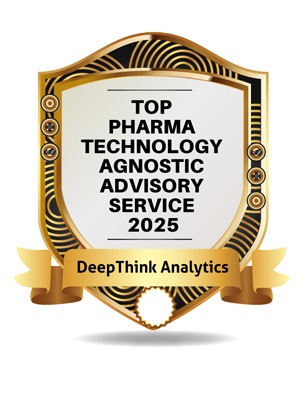
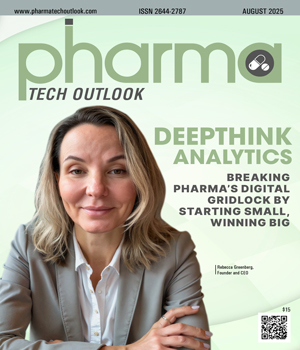
The buzz around AI tools is hard to ignore, and the promises are even harder to miss. Still, many pharma companies remain cautious, as integrating a new AI solution is neither straightforward nor inexpensive. AI adoption is often weighed down by costs, complex legacy systems integrations, and compliance hurdles. When vendors layer on ambitious five-year implementation plans, taking the first step becomes a daunting challenge. Rebecca Greenberg, founder and CEO of DeepThink Analytics, shifts the conversation by asking pharma companies, ‘What’s the smallest, most meaningful step you can take right now?’ This is her first step to guide clients through digital transformation and AI implementation projects with a practical and feasible approach. Her strategy is use case driven, focusing on real-world scenarios, where AI or digital tools can offer immediate, tangible value, helping clients make progress without being overwhelmed by large-scale, abstract solutions. According to Greenberg, AI doesn’t need to transform a business’ entire operation overnight. Sometimes, the best place to start is with the everyday tasks that slow the teams down. Start small, and the momentum to drive change takes care of itself. “My clients are the experts in their world. My role is to help them rethink the systems they already know and navigate change without chaos. We don’t sell solutions—we co-create them,” says Greenberg. That’s why Greenberg’s method stands out. As a technology-agnostic, she understands many companies are already locked into AWS, Databricks, or legacy systems they can’t easily replace, while others simply lack the budget for sweeping, all-at-once AI rollouts. Her approach begins with a pragmatic assessment of the organization’s current assets, prioritizing efficiency over costly, complex solutions. This can involve leveraging in-house tools—such as using Copilot to draft L&D scripts—or initiating low-risk, high-value pilot projects. In some cases, it is as straightforward as organizing messy spreadsheets, where one person puts ‘Cape Canaveral, Florida’ in a single cell and someone else splits it across three columns. This step helps clients recognize how much of their digital transformation journey still lies ahead while gaining a clearer understanding of what true digital transformation entails. Small wins like these build trust and momentum. Once people see what’s possible, they’re more open to exploring larger-scale solutions that add more value. Greenberg achieves this by leading with the right questions — the kind that help clients surface the answers they had all along.
For food supplement brands seeking to expand globally, creating high-quality products is only one part of the equation. Success depends on how well those products fit each market. Regulations, consumer habits and cultural nuances vary widely, and navigating them requires more than production power. It takes a partner with deep local expertise and strong operational capability, one who can interpret regulatory frameworks, customize formulations and deliver strategies that resonate on the ground. Cunsa International brings over 22 years of experience helping supplement brands succeed across some of the world’s most demanding markets. Founded in Chile, one of the most rigorous regulatory environments globally, Cunsa built its foundation on precision, compliance and adaptability. Today, it operates as an embedded partner, working closely with clients to develop and scale tailored supplement lines. Each product is locally aligned, meeting regulatory requirements, reflecting consumer expectations and positioned for long-term commercial success. Over 15 years ago, All Nutrition—a company that shares some co-founders with Cunsa—became Chile’s largest healthy nutrition retail chain. This experience gave the team a first-hand understanding of the real challenges brands face: from navigating complex regulations to connecting with end consumers and delivering the kind of support that truly drives success. That insight, gained from the retail side, has been fundamental to how Cunsa supports its strategic partners today “We’ve sat on both sides of the table as brand builders and manufacturing partners,” says Francisco Cáceres, co-founder. “That dual perspective is at the heart of how we support our clients today.” That foundation shaped what would become Cunsa’s defining approach. Its 360º Service model is a fully integrated solution that supports partners throughout the entire journey, from concept to shelf. This includes brand development, customized formulation and packaging, as well as hands-on support like sales training and post-launch guidance. What sets the model apart is its collaborative nature. Cunsa works closely with commercial and marketing teams while staying tightly aligned with logistics operations to ensure smooth execution. It offers the agility and insight needed to grow categories across regions. While brands focus on consumer connection and commercial growth, Cunsa manages the operational and regulatory complexity..


Court Square Group, a leader in life sciences technology, is transforming clinical operations through the innovative application of artificial intelligence (AI). With over three decades of experience in the pharmaceutical and biotechnology sectors, Court Square Group focuses on providing practical AI solutions designed to streamline operations, reduce costs, and enhance the overall efficiency of clinical trials. Leading this transformative effort is Keith Parent, CEO of Court Square Group, who emphasizes that the company’s mission is to offer solutions rooted in real-world applications rather than being driven by the current hype surrounding AI. He explains that while there is significant excitement around AI, court Square Group’s approach is centered on solving concrete problems within clinical operations. “We aim to create tools that save time and make jobs easier, not just tools that sound exciting in theory,” says Parent. He underscores the importance of practical AI applications that address the challenges faced by professionals in clinical research. This pragmatic mindset has guided the development of several AI-powered solutions at court Square Group, all aimed at optimizing the labor-intensive aspects of clinical trials. One such innovation is the company’s AI-driven Trial Master File (TMF) auto-classification tool. Managing a TMF, which contains all essential documents related to a clinical trial, is a time-consuming process typically involving multiple human checkpoints. Clinical research associates and quality assurance staff spend significant time opening, reading, and categorizing documents to ensure compliance. The manual nature of this work makes it prone to errors and delays. court Square Group’s TMF auto-classification tool addresses this challenge by employing AI to read and classify documents while still providing for human final approval. This reduces the total time and human effort required. The tool leverages machine learning to assess the content of each document and automatically place it in the correct category with a high level of confidence. It significantly reduces the workload of clinical staff, allowing them to focus only on documents that need further review. As a result, the time taken to process these documents has been reduced by up to 25 percent for some clients while still providing “Human in the Loop” verification, leading to substantial cost savings across multiple trials.
Pharma Consulting

Melissa Lore, Chief Compliance Officer, FFF Enterprises, Inc
Pharma Manufacturing

Maribelle Guloy, Director of Clinical Development, American Regent, Inc
Pharmacy Management

Carrie Lewis, Executive Director, Clinical Program Optimization, Endo International plc
Pharma Consulting

Tiffany Anderson, Senior Manager, Global Quality Compliance, Nelson Laboratories, LLC
Pharmacy Management

Tim Stow, Global Head of Ethics & Compliance, Galderma

Pharmacogenomics
Jon Kallay, Senior Technology and Market Development Manager, Charles River Laboratories

Pharma Consulting
Jennifer Perrin, Director, MMS Holdings Inc
The pharmaceutical industry is evolving towards preventive health, leveraging its expertise to enter the dietary supplement market, fostering consumer trust and expanding its role in holistic wellness.
The pharmaceutical industry is shifting from vendor-dependent platforms to tech-agnostic advisory services, focusing on unique problems rather than pre-established solutions for better flexibility and innovation.
The Modern Approach to Pharma Technology and Compliance
Three areas are shaping the conversation: technology-agnostic advisory services, advanced drug safety and compliance management solutions, and the development of dietary supplements that meet both market demand and stringent regulatory standards.
One persistent challenge is complexity. Modern product pipelines span continents, technologies, and therapeutic areas. Agnostic advisory services are emerging as a vital bridge—helping organizations evaluate and integrate solutions without being locked into proprietary platforms. This flexibility is critical as new modalities move into mainstream pipelines, from cell therapies to mRNA-based treatments.
Drug safety and compliance management face pressures. Regulatory bodies worldwide are raising the bar on traceability, adverse event monitoring, and post-market surveillance. Automation, AI-enabled data analysis, and unified reporting frameworks are now essential to keep pace. However, technology alone is insufficient—solid processes and cross-functional alignment remain indispensable.
In dietary supplements, innovation is accelerating, but so is oversight. Demand for natural, functional, and personalized products continues to grow, creating opportunities for companies combining rigorous scientific validation with speed-to-market strategies. Technology-enabled development platforms are proving invaluable, supporting formulation, quality control, and compliance from concept to shelf.
This issue features contributions from leading organizations that are making an impact in these arenas. Companies like Charles River Laboratories and Nelson Laboratories, LLC exemplify how scientific expertise, quality systems, and adaptive technology come together to address emerging industry needs.
The future of pharma will be shaped by those who can unite innovation with compliance, and speed with scientific rigor. Success will come to those companies that turn regulatory demands into competitive advantages and evolve technology into opportunities for better outcomes, setting new standards for the entire industry.