
THANK YOU FOR SUBSCRIBING
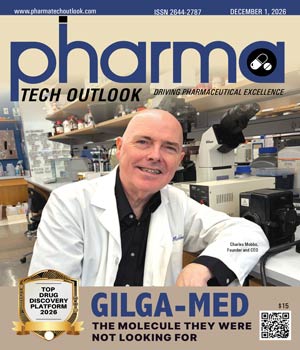
Every “Eureka!” moment begins with a question. But what happens when the most interesting answer is one nobody thought to ask for? In drug discovery, that moment can be more elusive. A biological effect may appear before its cause is known, presenting researchers with a choice: pursue what they expected to find, or investigate what the evidence has unexpectedly placed before them. Sometimes the most revealing question comes only after an unexpected result. For Charles Mobbs, that principle sits at the heart of Gilga-Med. Traditional target-based drug discovery begins with a specific molecular target and searches for compounds designed to influence it. The company’s phenotypic screening approach starts with a biological effect and then investigates what produced it. The distinction reflects a long-running evolution in drug discovery. Early approaches often relied on observable effects to identify promising compounds, while advances in molecular biology shifted attention toward increasingly specific targets. The approach is particularly useful when diseases involve multiple interacting biological processes, allowing researchers to identify promising biological effects before fully understanding the mechanisms behind them. Gilga-Med brings the observed effect back to the starting point, using it to guide the questions that follow.
For more than four decades, INTERCHEM Corporation has helped companies solve the intricate puzzle of pharmaceutical manufacturing by aligning materials, producers and regulatory expertise. The global contract manufacturing partner serves as a one-stop resource in the custom pharmaceutical space, helping clients bring products to market with speed and precision. Backed by a worldwide network of trusted partners and a track record of navigating complex regulations, Interchem gives clients the confidence and agility to compete in dynamic markets. Its broad portfolio of chemistries and deep in-house technical and regulatory expertise efficiently delivers tailored solutions. Whether it's product selection, new-product development or custom logistics, Interchem’s experienced team fulfills every need. The team includes industry veterans who have tackled virtually every type of development challenge. Many have been with the company for over 15 years. “Our advantage is that we can leverage our broad areas of expertise to assist our clients in getting products to market faster,” says Bob Golle, vice president. “We are nimble and operate quickly because we perform all services in-house.” This integrated model is strengthened by its role as a sales and marketing representative and regulatory agent for a vast network of CMOs across different regions. Clients get access to a wide-reaching, well-coordinated manufacturing ecosystem. Interchem’s wealth of capabilities, applied globally, accommodates an array of project requirements, including production scale, technologies, quality and regulatory requirements and timelines. The focus is always on matching the client’s requirements with the manufacturer most capable of delivering them. This guarantees faster turnaround and fewer headaches. Interchem also specializes in antibiotic production, custom manufacturing services and patent assessments. Its long-term partnership with ACS Dobfar has enabled it to develop an expansive collection of cephalosporins, penicillins, carbapenems and other anti-infectives, in lyophilized, injectable and bag form, to U.S. and international pharmaceutical companies. It also owns and markets a veterinary brand, U.S. Vet. For patent assessments, it combines the expertise of its in-house team and outside counsel with whom Interchem has worked for decades. To facilitate the process, its newly formed product selection team leverages extensive market knowledge and accesses numerous highly respected market research databases and services.


CALICI began with a simple yet transformative vision to make artificial intelligence a practical, everyday tool for drug discovery. Founded in 2018, when AI was rapidly advancing, the company’s origins trace back to research at Baylor College of Medicine in Houston, Texas. While working on antiviral treatments for norovirus, the team tested hundreds of compounds using conventional in silico tools without success. A discussion with co-founder and AI specialist Daniel led to a new idea of training AI on the team’s past results to cut down the number of trials. Yet existing AI tools required complex coding skills, creating a barrier for many biologists. Calici set out to change that by developing a fully web-based platform that brought advanced AI directly to the laboratory scientist. The result is Pharmaco-Net®, an online application that looks like a standard webpage but delivers sophisticated drug discovery capabilities. Guided by an AI agent called MediBot, users can upload protein structures, identify active sites, screen massive compound libraries, predict ADME/Tox properties, and refine molecular designs without requiring IT support. “Our approach makes AI drug discovery practical and immediate, turning digital predictions into real compounds ready for the lab,” says Choi Jae-Mun, CEO. Accessible, Actionable, and Built for Speed Many AI drug discovery companies run their predictive models internally and provide results to clients. Calici takes a different approach by offering its AI tools directly to researchers. This allows scientists to interact with the technology in real time, making the process more collaborative and transparent. The company also addresses a major industry challenge by turning AI-generated molecules into real, testable compounds. Standard generative models often create novel molecules that require months to synthesize or prove synthesizable altogether. Calici avoids these delays by focusing on stock chemical libraries from established vendor partners. If the AI recommends a compound, it is already available, synthesizable, and can be shipped to the client’s lab immediately. Behind this is a big data search AI strategy using reinforcement learning agents. Instead of scanning hundreds of millions of compounds one by one, these agents analyze the chemical space, identify patterns, and focus searches where the best candidates are most likely to be found. Pharmaco-Net® draws from an extensive virtual compound library of over 600 million molecules, sourced through partnerships with TargetMol, Mcule, and Enamine, enabling rapid in-silico screening and real-world feasibility.
Pharmacy Management

Safwan Kezbor, M.D., Executive Medical Director, Global Clinical Development, Shionogi
Drug Discovery and Development

Jeffrey W. Sherman, Chief Medical Officer Emeritus, Horizon Therapeutics Now Amgen
Pharma Safety & Compliance
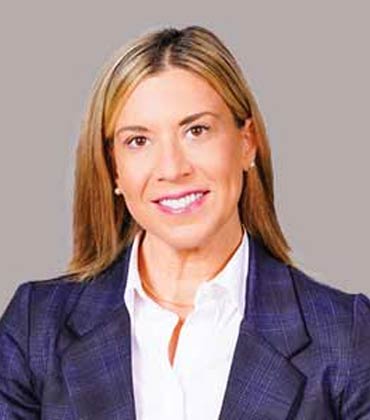
Cori L. Rizman, Vice President of DEA Compliance, Ascent Pharmaceuticals, Inc
Clinical Trials
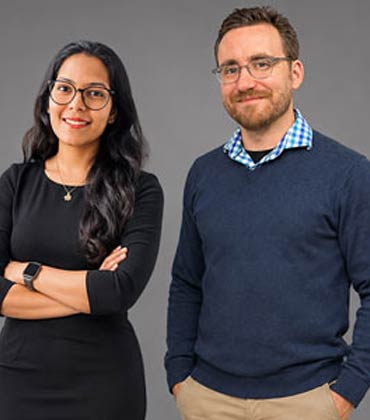
John Harp, Deployment Team Manager, and Yaashviny Nair, Associate Marketing Manager, Novozymes
Supply Chain

Atul Dubey, Director, Pharmaceutical Continuous Manufacturing, US Pharmacopeia

Supply Chain
Nicole Rosenberger, Senior Vice President, Head of Information Technology, NewAmsterdam Pharma Corporation

Contract Packaging
Paul Murasko, Head of Digital Innovation & Marketing Operations, Azurity Pharmaceuticals
Anticancer drug discovery supports drug efficacy optimization, enables personalized treatment development and advances targeted cancer therapies.
Pharmacovigilance software is evolving through AI, intelligent automation, cloud platforms, and advanced safety data analytics.
Phenotypic Discovery and Partnership in Biopharma
Gilga-Med has been acknowledged as the Top Drug Discovery Platform 2026 for translating biological clues into discovery in a structured manner. Founder and CEO, Charles Mobbs, created the company based on phenotypic screening, with the starting point being the effect and not the target itself. High-throughput screenings in C. elegans models harboring human amyloid-beta, inflammation studies, and medicinal chemistry led to the development of GM-310, which selectively accumulates in the brain, decreases glucose metabolism and cytokine levels and is under evaluation as a therapy for hemorrhagic stroke, which may be used in future for ischemic stroke and Alzheimer’s disease.
Jeffrey W. Sherman, Chief Medical Officer Emeritus, Horizon Therapeutics Now Amgen, reflects on the challenges of communicating highly technical information to investors, mitigating risks of narrow product pipelines and maintaining the focus on rare diseases with huge unmet patient needs faced by CMOs working for small biotech firms. Nicole Rosenberger, Senior Vice President and Head of Information Technology at NewAmsterdam Pharma Corporation, explains how managed service providers can be selected and how to integrate them into the existing IT team as an extension of the latter.
Leadership that pairs scientific openness with disciplined partnership remains essential. Explore the edition further to see how these perspectives and platforms are shaping discovery and operational readiness across the sector.