
THANK YOU FOR SUBSCRIBING


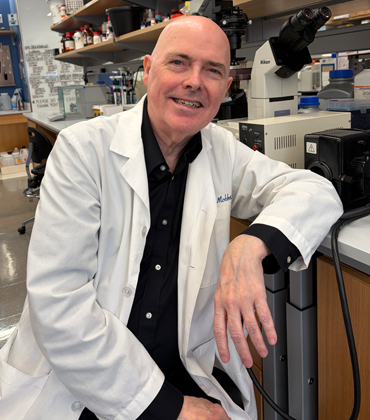 Charles Mobbs, Founder and CEO
In drug discovery, that moment can be more elusive. A biological effect may appear before its cause is known, presenting researchers with a choice: pursue what they expected to find, or investigate what the evidence has unexpectedly placed before them. Sometimes the most revealing question comes only after an unexpected result.
For Charles Mobbs, that principle sits at the heart of Gilga-Med. Traditional target-based drug discovery begins with a specific molecular target and searches for compounds designed to influence it. The company’s phenotypic screening approach starts with a biological effect and then investigates what produced it. The distinction reflects a long-running evolution in drug discovery. Early approaches often relied on observable effects to identify promising compounds, while advances in molecular biology shifted attention toward increasingly specific targets. The approach is particularly useful when diseases involve multiple interacting biological processes, allowing researchers to identify promising biological effects before fully understanding the mechanisms behind them. Gilga-Med brings the observed effect back to the starting point, using it to guide the questions that follow.
Its platform combines high-throughput phenotypic screening with experimental investigation, medicinal chemistry, and AI-supported analysis, bringing unexpected biological responses into a structured process of drug discovery.
GM-310 would emerge from this thinking, shaped by years of research from Mobbs and his team into how dietary restriction delays age-related diseases. Their research linked reduced glucose metabolism with protective effects involving inflammation and cancer, guiding the team’s search for small molecules that could reproduce aspects of dietary restriction’s effects. This understanding also helped them interpret unexpected screening results and identify biological signals worth pursuing.
“Our decisions are always being guided by our understanding of how dietary restriction delays age-related diseases,” says Mobbs, founder and CEO.
Letting the Phenotype Lead
Gilga-Med’s first high-throughput screen used C. elegans carrying the human amyloid-beta 1-42 peptide. The transgenic worms developed measurable impairments associated with the protein’s toxicity, creating a disease-related phenotype that could be quantified through video analysis. Because C. elegans live for only about three weeks and develop measurable impairment at around two weeks, the model allowed researchers to evaluate large numbers of compounds in a living organism.
The team screened 2,560 compounds from a library of FDA-approved drugs and natural compounds, examining whether individual molecules could protect the worms from impairment. Instead of searching specifically for compounds that inhibited amyloid-beta, the researchers measured the biological effects associated with its toxicity. This allowed the screen to identify potentially protective activity without requiring the team to begin with a predetermined molecular target.
The model also challenged assumptions about what a simple organism can reveal about human disease. Mobbs had trained as a mouse geneticist and initially shared the skepticism surrounding C. elegans. His research, however, found that mechanisms associated with lifespan extension and dietary restriction could be observed across worms, mice and human cells. This supported the use of the organism as an early discovery model for investigating biological processes relevant to aging and disease.
Our decisions are always being guided by our understanding of how dietary restriction delays age-related diseases.
The screen produced several results, including compounds whose effects the researchers already understood. One finding opened a less expected avenue of investigation: a tricylic compound emerged as the third most protective compound in the initial screen, following phenobutyrate and methicillin. Though it was not the strongest hit, the compound attracted Mobbs’ attention because the chemical class was known for its ability to cross the blood-brain barrier and had reported anti-inflammatory properties. These characteristics made it worth investigating whether related molecules could offer stronger protective activity.
The screening was blinded, and Mobbs personally performed the uncoding. The unexpected result prompted a more focused question: which properties of the compound and related molecules might account for the observed protective activity?
To investigate that question, Gilga-Med conducted a second screen focused on inflammation. The team tested 60 compounds from the chemical class identified in the initial work, measuring their ability to inhibit TNF-alpha secretion from microglia following an inflammatory stimulus. The results helped establish structure-activity relationships, connecting differences in molecular structure with differences in biological activity. Follow-up testing also found that the compounds inhibited glycolysis, the process by which cells break down glucose, linking their anti-inflammatory activity to the glucose-metabolism mechanism Mobbs had investigated through his dietary-restriction research.
 This shifted the work from observing an unexpected effect to systematically investigating how related molecules behaved. Instead of studying one compound in isolation, the team could compare chemical structures, identify features associated with stronger activity and use those findings to guide the development of new candidates.
Drawing on the structural information and features the team believed could reproduce aspects of dietary restriction, the researchers predicted and synthesized six novel small molecules. Two showed greater activity than the original compounds in both TNF-alpha inhibition and the C. elegans impairment model.
One became GM-310.
The progression illustrates the value of the phenotype-first approach. The initial screen revealed an effect the researchers had not specifically set out to find. Follow-up experiments then helped turn that observation into a more systematic search, with biological testing and medicinal chemistry narrowing the possibilities and guiding the design of molecules that had not previously existed.
“We never would have gotten to this point if we’d done target-based,” says Mobbs.
Turning Experiments into Discovery Intelligence
The process generates information beyond the development of an individual compound. Each experiment links a chemical structure to a measurable biological response, building a dataset that connects molecular features with phenotype and disease biology.
Gilga-Med uses AI-supported analysis to examine these structure-activity relationships and help predict or generate new small molecules. The experimental results inform subsequent molecular design, while biological validation tests whether the predicted changes produce the desired response. Each cycle adds evidence that can guide the next round of screening and compound development.
This combination of phenotypic biology, medicinal chemistry and AI is central to the company’s discovery model. Each screen becomes a source of new insight for GilgaMed, helping the company refine its understanding of which molecular features are associated with beneficial biological effects and guide future discovery efforts.
The work has been supported by a multidisciplinary team at Mount Sinai. Rachel Litke established and conducted the original phenotypic screen, while James M Vicari and Bik Tzu Huang contributed to the secondary TNF-alpha studies and corroboration experiments. A particularly important contribution came from Jian Jin, one of the world’s leading medicinal chemists who synthesized the novel small molecules that advanced the discovery process. Another Mount Sinai colleague, Dr. Chris Kellner, conducted the mouse-model studies, helping evaluate the compounds’ potential in preclinical research.
And further neurosurgical expertise supported subsequent compound development and hemorrhagic stroke research.
From Discovery to the Clinic
Gilga-Med’s first planned clinical focus is hemorrhagic stroke, a condition for which the company sees a significant unmet medical need. The goal is to determine whether the biological effects observed in preclinical studies can translate into a meaningful therapeutic benefit for patients.
 Bleeding inside the brain can cause rapid damage, making the timing of intervention important. Treatment may involve removing accumulated blood after a patient reaches the hospital. Gilga-Med is investigating whether a rapidly acting drug could eventually provide another way to intervene, although that possibility remains to be established through clinical development.
Preclinical findings have helped shape the company’s interest in this indication. In mouse studies, orally administered GM-310 was concentrated in the brain within approximately 15 minutes, at concentrations above those required to produce protection in the model.
Further studies found that GM-310 reduced glucose metabolism and inhibited the secretion of pro-inflammatory cytokines, including in human myeloid-cell experiments. Its complete mechanism of action remains under investigation.
Hemorrhagic stroke remains the planned first clinical indication for GM-310. If development progresses successfully, Gilga-Med sees ischemic stroke and Alzheimer’s disease as potential future indications for the candidate. More broadly, the company’s platform could be applied to other disease areas, including Parkinson’s disease, cancer and diabetic complications. These represent research opportunities for the underlying approach, as opposed to established therapeutic applications of GM-310.
Diabetic complications have a particular connection to Mobbs’ research into aging and dietary restriction. He describes these complications as an accelerated form of aging and points to academic work investigating whether modified dietary restriction can reverse them. That research has included reported reversal of diabetic kidney failure, while related work on diabetic neuropathy is still being investigated. Whether GM-310 can produce similar effects remains to be evaluated.
For now, the priority is advancing the scientific findings toward clinical testing. Gilga-Med is increasing its focus on fundraising, investor outreach and business development, while recognising the importance of pharmaceutical expertise and commercial infrastructure as its programs progress. GM-310 must ultimately establish its safety and efficacy in humans before its therapeutic potential can be determined.
Gilga-Med’s work illustrates how an unexpected biological signal can become the starting point for a structured drug discovery process. The company’s phenotype-first platform has taken an initial screening result through follow-up experiments, chemical optimization and preclinical investigation to a lead candidate. The next milestone is to determine whether that progress can translate into a safe and effective treatment for patients.
“Chance favors the prepared mind,” says Mobbs, reflecting on the unexpected findings.
Recognized as the Top Drug Discovery Platform 2026, Gilga-Med is pursuing a future in which discoveries like GM-310 could open new therapeutic avenues for hemorrhagic stroke, Alzheimer’s disease and other age-related conditions. Its ambition extends beyond a single drug candidate: to translate insights into glucose metabolism and inflammation into treatments for diseases that remain difficult to address. If successful, this work could expand the possibilities of drug discovery and bring patients closer to treatments that today remain out of reach.

Company
Gilga-Med
Management
Charles Mobbs, Founder and CEO
Description
Gilga-Med is a drug discovery company leveraging high-throughput phenotypic screening, small-molecule chemistry and computational approaches to identify therapies for complex diseases. Built on research into aging, metabolism and dietary restriction, the company develops novel compounds designed to address interconnected biological pathways across conditions including stroke, neurodegeneration and inflammatory disorders.


