
THANK YOU FOR SUBSCRIBING

Pharma Tech Outlook Weekly Brief
Be first to read the latest tech news, Industry Leader's Insights, and CIO interviews of medium and large enterprises exclusively from Pharma Tech Outlook
Human health is often viewed through the lens of disease. Yet long before symptoms appear, the body is constantly working to maintain balance through complex biological systems that support energy production, cellular communication, immune function, and metabolic health. When these systems function efficiently, they help the body adapt, recover, and maintain overall well-being. For Liaquat Hossain, executive vice president of Revivify for Life, understanding how these foundational systems work has become a central focus. At a time when growing attention is being directed toward improving long-term health outcomes across individuals, workplaces, and healthcare systems, he believes greater focus should be placed on the biological processes that help people maintain health from the start. This perspective has shaped Revivify’s approach to wellness, which centers on supporting cellular health, antioxidant activity, and microbiome balance through science-driven nutritional formulations. Rather than focusing solely on managing symptoms after dysfunction occurs, Revivify advocates a preventive wellness model that emphasizes maintaining the body’s natural biological systems. The company’s formulations are designed to support healthy cellular function, efficient energy metabolism, and beneficial microbial activity that plays a vital role in digestion, immunity, and overall resilience. Recognition as the Top Nutraceutical Company Delivering Patented Breakthroughs in Human Health reflects the company’s innovation and growing influence in the health and wellness landscape. Looking Beyond Symptoms Modern medicine has transformed human health by improving the diagnosis and treatment of countless conditions. At the same time, growing attention is being given to the factors that help maintain wellness long before illness develops. For Hossain, that conversation begins at the cellular level. He believes that supporting the body’s foundational biological processes can play an important role in overall well-being.
Gerhard Apfelthaler, Founding Partner
Drug delivery continues to face a critical challenge in making medicines usable for patients who struggle with traditional formats. Tablets and liquids often fail populations such as children, the elderly and individuals with swallowing or neuromotor difficulties, creating barriers to effective treatment. Oak Therapeutics addresses this gap by focusing on usability as a primary design principle. Its oral dissolvable strip technology is engineered to remove barriers such as swallowing difficulty, refrigeration and complex preparation. “At Oak, we start from the opposite premise: no one should be left behind in healthcare, regardless of geography, culture, cost or local policy environment,” says Gerhard Apfelthaler, founding partner. Designing for Real-World Accessibility A central issue in drug delivery is the gap between what is technically available and what patients can realistically use. Many treatments require water, refrigeration or precise preparation, making them impractical in certain environments. Oak Therapeutics addresses this by developing thin, portable strips that dissolve in the oral cavity without water. These strips embed full therapeutic doses and can be engineered to dissolve within seconds or over extended periods, depending on treatment needs. This approach reduces caregiver burden and minimizes dosing errors, while improving adherence across diverse patient groups. By focusing on acceptability and simplicity, the company ensures that treatments fit into real-world conditions. Its framework considers factors such as taste, cultural fit, and ease of administration, ensuring that each product aligns with patient and caregiver needs across different settings.

Kate Hammeke, CEO
Pharmaceutical organizations today face increasing pressure to make informed decisions around commercialization, outsourcing and competitive positioning. In a landscape where data is abundant but often disconnected from real-world applications, the challenge lies in obtaining insights that reflect actual industry experience. ISR addresses this by grounding its research in direct input from professionals actively involved in clinical development and drug manufacturing. Its methodology is built around a curated Life Science Panel composed of managers and executives who contribute insights based on their day-to-day roles. “Our Life Science Panel is a carefully curated network of pharmaceutical and biotechnology professionals who routinely contribute to ISR’s market research studies,” says Kate Hammeke, CEO. Building Research on Verified Industry Experience A key issue in market research is ensuring that data reflects meaningful, experience-based input rather than generalized opinions. Without proper screening and industry context, research findings can lack relevance for decision-making. ISR addresses this through a rigorous respondent selection process that ensures participants meet defined criteria and possess relevant expertise. This approach allows the company to capture insights rooted in real operational and strategic challenges within pharmaceutical organizations. Its analysts further strengthen this process by applying industry-specific knowledge when designing surveys and interpreting results. By focusing on clinical development and drug manufacturing, ISR ensures that its research remains aligned with the needs of its clients. This combination of verified respondents and domain expertise enables ISR to deliver insights that support more confident and informed decisions.
Pharma Consulting

Nick Thomson, Senior Director, Chemical Research and Development, Pfizer
Pharma Manufacturing

Sherene Min, VP, Head of Clinical Development, ViiV Healthcare
Contract Research Organization

Robert Lambert, Director Of Technical Services, Noven Pharmaceuticals
Pharmacy Management

Safwan Kezbor, M.D., Global Medical Lead, (Senior Medical Director), Clinical Development, Shionogi Inc
Drug Discovery Enabling

Jessica Wilson Rayse, Assoc Director of Product Management, Accugenix, Charles River Laboratories

Pharma Manufacturing
Joseph Lambert, Pharm.D., BCSCP, Vice President of Corporate Quality Assurance, Biocon Biologics

Quality Assurance
Dawn Niccum, Director, Quality Assurance, inSeptionGroup
Advancements in NMR spectrometry enhance pharmaceutical efficiency, reducing development risks and improving molecular analysis for better decision-making and operational resilience.
Causal AI for pharmaceutical development improves research accuracy, strengthens scientific decision-making, accelerates drug discovery, enhances collaboration, and optimizes development workflows.
Advancing Health Through Preventive Science
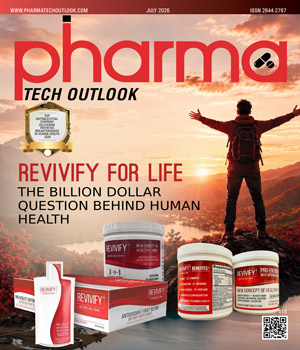
Our cover story, Revivify For Life, recognized as the Top Nutraceutical Company Delivering Patented Breakthroughs in Human Health 2026, is advancing a preventive wellness model built around cellular health, microbiome balance and antioxidant support. Rather than focusing solely on disease management, the company has developed patented formulations designed to support the body’s foundational biological systems through science-based nutrition. By bringing together advances in oxidative stress biology, microbiome research and metabolic health, Revivify For Life is helping shift the conversation toward preserving health before dysfunction emerges.
This issue also features perspectives from industry leaders whose work reflects the evolving priorities of pharmaceutical innovation. Joseph Lambert, Pharm.D., BCSCP, Vice President of Corporate Quality Assurance, Biocon Biologics, emphasizes that product quality begins long before manufacturing, highlighting the importance of supplier verification, regulatory compliance, cross-functional collaboration and continuous improvement in delivering safe, high-quality nutritional products.
Meanwhile, Safwan Kezbor, M.D., Executive Medical Director, Global Clinical Development at Shionogi, explores how precision medicine, gene therapy and artificial intelligence are transforming rare disease drug development, creating new opportunities to accelerate research while addressing long-standing unmet clinical needs.
The organizations and leaders recognized in this edition show that meaningful health care innovation begins at the intersection of scientific discovery, strong quality systems and patient-centered thinking. Whether advancing preventive nutrition or accelerating the development of therapies for complex diseases, they share a commitment to improving long-term health outcomes through practical, evidence-driven solutions. We invite our readers to explore their perspectives and discover how today’s scientific advances are shaping the future of healthcare.