
THANK YOU FOR SUBSCRIBING
The familiar green and white USDA seal vouches for Certified Organic. For years, capsule shells were made from gelatin or cellulose, standing in the way of that essential certification. With capsules preferred over powders and tablets, non-Organic shells became a credibility obstacle for growing Organic brands. Bright Pharma Caps changed the game in 2014 by introducing what it describes as the World’s first NOP-certified Organic capsule, Bright-Poly, giving eligible encapsulated products a path to the seal for the first time. Today, the company makes USDA-certified Organic pullulan capsules as well as delayed-release hydroxypropyl methylcellulose (HPMC) capsules, which they call their GAR (gastric acid resistant) and conventional HPMC capsules. Behind the Organic line is a manufacturer that makes its own pullulan powder—the material the capsules are made from—builds its own capsule-making machines and stocks the full line in five temperature-controlled warehouses in North America. “It’s our quality, the uniqueness of our Organic Certification and the quality of our capsules that gives us the edge,” says Patrik Barr, Director of Sales. “They are stronger and run better on the fast-filling capsule machines.”
Pharmaceutical companies still make their biggest commercial decisions on a calendar. Brand plans are set once a year, targeting is refreshed every six months, and campaign results arrive at the quarterly business review, often after the next campaign has launched. Meanwhile the market keeps moving. A competitor wins a label expansion, a payer adds a step edit, patients stall between approval and first fill. By the time a decision is revisited, the moment has usually passed. Arjun Bidesi, Founder and CEO of Orcana.AI, believes that rhythm belongs to the world before AI. “Every industry will run on agents, and the companies that start first will compound fastest,” he says. “We are building that for pharma.” Orcana.AI’s answer is a new way of working. Instead of being made once and reviewed months later, each decision runs as a loop. Agents watch the data around the clock, bring the signals that matter to the person who owns the decision, act once that owner approves and measure what happened. Then the loop runs again. Owners stay in control of every move while the agents do the watching, the analysis and the follow-through. Because every result feeds the next decision, outcomes do not simply improve once. They compound. “Today, a question becomes a project, and a decision gets revisited next quarter,” Bidesi says. “With Orcana, it becomes a loop that runs every week. The team that runs the most decision loops wins.”.


Drug development is evolving—shifting from small-molecule drugs (under 500 molecular weight) to larger (above 1,000), more complex compounds—designed to interact with biological pathways more precisely. Therapeutics like peptides and GLP-1 receptor agonists offer enhanced efficacy and target specificity but bring formulation challenges due to their size, fragility and poor oral bioavailability. These complexities demand advanced delivery systems and specialized handling. As a vertically integrated contract development and manufacturing organization (CDMO), Laviana Pharma navigates this complexity. By emphasizing early-stage formulation testing, Laviana helps uncover potential stability and delivery issues early, reducing downstream risks and accelerating the path to clinical success. Its scientific rigor and integrated capabilities make it a vital partner for companies bringing next-generation therapeutics to market. Speed and proximity have become Laviana’s key advantages. It has a specialized formulation laboratory in the U.S. designed specifically for the early-phase development of high-molecular-weight drug candidates. Working locally with U.S. clients means faster decisions, real-time adjustments and shorter timelines. Over the past 20 years, Laviana has helped develop hundreds of candidates and contributed to the successful launch of more than 30 drugs. Some of its early-stage collaborations have led to biotech breakthroughs later acquired by major pharmaceutical firms, an indicator of Laviana’s quiet but critical role in drug development success stories. Starting as a small CRO, Laviana quickly moved on to establishing its own pilot plant. After the R&D and manufacturing sites moved to their new locations, the upgrades Laviana received provided an advantage in equipment and capacity. Not only is Laviana able to do hydrogenation up to 2000 L, but the new trending high potency capability has also been recently added to Laviana’s portfolio. With a manufacturing capacity of up to 6300L and a team of more than 100 scientists, Laviana serves some of the most reputable pharmaceutical companies in the world. “Our role is to make drug development faster,” says Wenting Chen, co-founder and CEO. “Having early-stage development capabilities close to home with our hybrid supply chain strategy proves vital during emergencies like the pandemic when global supply chains get severely disrupted.” This strategy balances the reliability of local collaboration with the efficiency of global infrastructure. Along with the U.S.-based formulation lab, Laviana brings the globally distributed R&D and manufacturing network to advance programs from early development through commercialization. In Cangzhou, China, Laviana manages GMP manufacturing and the scale-up of high-potency APIs, where attention to regulatory compliance and technical detail is non-negotiable. Across the country in Beijing, the process development team uses AI-assisted retrosynthesis not as a buzzword, but as a practical tool, reworking complex synthesis routes to improve yields and cut down production time. Laviana’s fully automated facility in China is at the core of this integration, designed to support projects from early-stage research to late-phase clinical trials and commercial readiness.
Pharma Consulting

James Riddle, MCSE, CIP, CPIA, CRQM, Senior Vice President - Global Review Operations, Advarra
Drug Discovery Enabling

Jessica Wilson Rayse, Assoc Director of Product Management, Accugenix, Charles River Laboratories
Pharmacy Management

Shola Oyewole, MBA, Vice President – Digital Innovation, United Therapeutics Corporation

Oliver Hesse, VP & CMC Digital Transformation & Data Science Lead, Bayer

Paul Murasko, Head of Digital Innovation & Marketing Operations, Azurity Pharmaceuticals

Pedro Simon Romero Canovas, Corporate Director of Information Technology (CIO), Grupo Farma

eClinical Trial Management
Dawn Niccum, Executive Vice President, Quality Assurance, inSeption Group
APAC inhalation device manufacturing advances respiratory care through precision engineering, automation, connectivity, quality, sustainability, and patient-focused design.
Two-piece hard shell capsules support pharmaceutical delivery through precise manufacturing, material consistency, formulation compatibility and dependable quality control.
Advancing Pharmaceutical Innovation through Science and Intelligent Technology
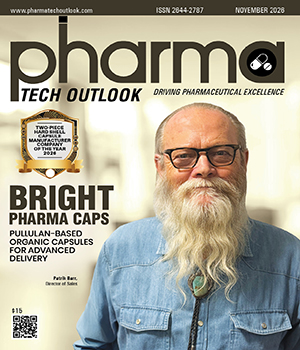
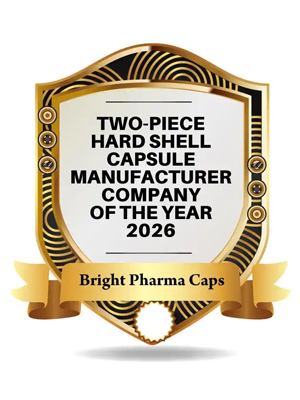
Our cover story spotlights Bright Pharma Caps, named Two-Piece Hard Shell Capsule Manufacturer Company of the Year 2026. In 2014, the company introduced Bright-Poly, which it describes as the world’s first NOP-certified organic capsule. Made from pullulan derived from organic starch, BrightPoly gives supplement manufacturers an option for products pursuing USDA Organic certification. The company also offers conventional and delayed-release HPMC capsules. By making its own pullulan powder and capsule machinery, Bright Pharma Caps has greater control over production quality and consistency.
This edition also recognizes Orcana.AI as Top AI Pharma Agentic Data-Science Platform 2026. Founded by Arjun Bidesi, the company uses coordinated AI agents to monitor commercial data, spot emerging signals and recommend actions for human approval. By bringing together information from sales, CRM, payer, patient services and marketing functions, the platform helps teams make better-informed commercial decisions.
Our contributors add perspectives on two important areas of pharmaceutical progress. Jessica Wilson Rayse, Associate Director of Product Management, Accugenix at Charles River Laboratories, discusses microbial identification, contamination control and next-generation sequencing. Oliver Hesse, VP & CMC Digital Transformation & Data Science Lead at Bayer, examines generative AI in biotechnology, emphasizing validation, transparency and human oversight.
Together, these contributions highlight an industry where innovation must balance technological progress with scientific rigor, product quality and responsible implementation.