
THANK YOU FOR SUBSCRIBING

Pharma Tech Outlook Weekly Brief
Be first to read the latest tech news, Industry Leader's Insights, and CIO interviews of medium and large enterprises exclusively from Pharma Tech Outlook
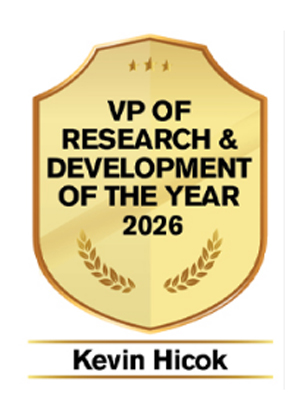
Kevin Hicok is Vice President of R&D at Direct Biologics, where he leads research and development programming for an emerging therapeutic modality based on an extracellular vesicle-enriched secretome. Drawing on more than 30 years in cell science, he brings experience across cell agriculture, regenerative cell technology and biologics development to guide research strategy, scientific programs and team leadership. Building a Path for a New Therapeutic Modality Developing a new class of medicine requires more than applying established methods to an unfamiliar product. It demands new ways of thinking when the scientific and development standards that normally guide R&D do not yet exist. For Hicok, leading research in this environment means addressing questions that have no established answers while maintaining the rigor required to demonstrate safety and efficacy. The challenge is particularly pronounced when a therapeutic contains thousands of different biomolecules, making conventional approaches to establishing identity, purity and potency difficult to apply. That reality has made creativity and persistence central to Hicok’s approach to R&D leadership. Rather than treating uncertainty as a reason to pause, he encourages the team to work through unfamiliar problems and develop solutions as the science progresses. The approach has become increasingly important as Direct Biologics moves into Phase III trials, where pioneering work must meet the demands of later-stage clinical development. Choosing Where Science Can Make a Difference A broad biological platform can create an unusual strategic problem. If a therapeutic can interact with multiple biological pathways and potentially regulate immune function across different disease states, the number of possible applications can quickly outgrow the resources available to investigate them. “ R&D leaders have to remain willing to examine whether the mechanism originally proposed for a therapy still ex
Rebecca Greenberg, Founder and CEO
The buzz around AI tools is hard to ignore, and the promises are even harder to miss. Still, many pharma companies remain cautious, as integrating a new AI solution is neither straightforward nor inexpensive. AI adoption is often weighed down by costs, complex legacy systems integrations, and compliance hurdles. When vendors layer on ambitious five-year implementation plans, taking the first step becomes a daunting challenge. Rebecca Greenberg, founder and CEO of DeepThink Analytics, shifts the conversation by asking pharma companies, ‘What’s the smallest, most meaningful step you can take right now?’ This is her first step to guide clients through digital transformation and AI implementation projects with a practical and feasible approach. Her strategy is use case driven, focusing on real-world scenarios, where AI or digital tools can offer immediate, tangible value, helping clients make progress without being overwhelmed by large-scale, abstract solutions. According to Greenberg, AI doesn’t need to transform a business’ entire operation overnight. Sometimes, the best place to start is with the everyday tasks that slow the teams down. Start small, and the momentum to drive change takes care of itself. “My clients are the experts in their world. My role is to help them rethink the systems they already know and navigate change without chaos. We don’t sell solutions—we co-create them,” says Greenberg. That’s why Greenberg’s method stands out. As a technology-agnostic, she understands many companies are already locked into AWS, Databricks, or legacy systems they can’t easily replace, while others simply lack the budget for sweeping, all-at-once AI rollouts. Her approach begins with a pragmatic assessment of the organization’s current assets, prioritizing efficiency over costly, complex solutions. This can involve leveraging in-house tools—such as using Copilot to draft L&D scripts—or initiating low-risk, high-value pilot projects. In some cases, it is as straightforward as organizing messy spreadsheets, where one person puts ‘Cape Canaveral, Florida’ in a single cell and someone else splits it across three columns. This step helps clients recognize how much of their digital transformation journey still lies ahead while gaining a clearer understanding of what true digital transformation entails. Small wins like these build trust and momentum. Once people see what’s possible, they’re more open to exploring larger-scale solutions that add more value. Greenberg achieves this by leading with the right questions — the kind that help clients surface the answers they had all along.


Dr. George Y. Li, Founder and President
While many pharmaceutical teams use deuteration mainly to slow metabolic degradation through kinetic isotope effects (KIE), that prevailing practice captures only a narrow slice of what deuterium chemistry can deliver in real discovery settings. The broader and more transformative advantages remain largely under explored, especially where pro chiral scaffolds become chiral in patients and stereochemical productivity governs true efficacy and safety. CombiPhos Catalysts is changing this scenario with a platform designed to convert deuteration from a single switch into a strategic engine for program drug design, IP protection, and maximizing the application of approved drugs and drug candidates in development. Derived from DuPont Central R&D’s combinatorial catalysis heritage and augmented by specialty catalyst assets competitors have not replicated, CombiPhos has spent two decades translating homogeneous catalysis into site specific deuteration that discovery teams can deploy early and at scale. The company positions itself as the world’s largest advanced deuterium reagent supplier and a deuterated CRO, serving more than 1,000 biopharma and materials clients across 22 countries with over 10,000 deuterated products and 1,000 new reagents developed each year. Founder and president Dr. George Y. Li and company consultant Roy DeLucia describe an execution first identity that has earned “producer of last resort” mandates; with more than 100 custom deuterated analog requests fulfilled without a miss, for projects other providers decline. “Most pharmaceutical companies use off-the-shelf starting materials and miss the real advantages because deuterium chemistry is difficult, which is exactly where we focus,” says Dr. Li. CombiPhos advances a non radioactive isotopic approach that blends deuterium’s KIE, and deuterium atoms as new “blocking” groups instead of just swapping out hydrogen atoms with deuterium to slow metabolism (as is common) with proprietary chiral control strategies to address a persistent blind spot: in vivo emergence of chirality that can result in half of the drug being inactive and/or even counterproductive, because only one “handed” form (enantiomer) of the molecule may be effective. Traditional methods cannot effectively predict, control, and fix this issue because of the chirality to be only produced in vivo. By instrumenting metabolically essential positions, carefully placed deuterium by catalysis can slow rate determining C–H oxidations or metabolism and bias enantioselective pathways, improving net efficacy and toxicity profiles in ways conventional workflows leave to chance. Ribociclib is cited as an illustrative scaffold class for the pro chiral to chiral transition under metabolism, underscoring why stereochemical outcomes must be engineered rather than assumed.
Immunotherapy

Charles G. Drake, M.D., Ph.D., Vice President, Immuno-Oncology, The Janssen Pharmaceutical Companies of Johnson & Johnson
Pharmacy Management

Safwan Kezbor, M.D., Executive Medical Director, Global Clinical Development, Shionogi
Pharma Consulting

Melissa Lore, Chief Compliance Officer, FFF Enterprises, Inc
Pharma Manufacturing

Diane Paskiet, Director of Scientific Affairs, West Pharmaceutical Services
Pharma AI

Lina Parra Cartagena, Associate Director of Finance , Vertex Pharmaceuticals [NASDAQ: VRTX]
Pharma Consulting

Tiffany Anderson, Senior Manager, Global Quality Compliance, Nelson Laboratories, LLC
Pharma Marketing

Kipp Kreutzberg, Vice President of Global Sales and Marketing, Syneos Health

Nicole Rosenberger, Senior Vice President, Head of Information Technology, NewAmsterdam Pharma Corporation

Clinical Trials
Dawn Niccum, Executive Vice President, Quality Assurance, inSeptionGroup
Data intelligence platforms enhance operational efficiency, accelerate business intelligence processes and drive business growth and innovation.
AI-native drug development requires strong data governance, regulatory compliance, and organizational readiness for success.
Leading R&D through Uncharted Science
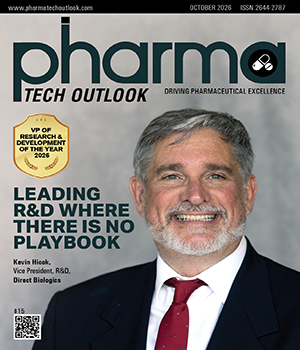
At the center is Kevin Hicok, Vice President, R&D, Direct Biologics, and Pharma Tech Outlook’s VP of Research & Development of the Year 2026. With more than 30 years in cell science, Hicok leads R&D for an emerging therapeutic modality based on an extracellular vesicle-enriched secretome. His approach reflects the realities of developing therapies without an established playbook. He encourages teams to work through unanswered scientific questions while maintaining rigor around safety and efficacy. He combines decades of cell biology data with AI analytics to guide indication selection while addressing manufacturing variability early. He also believes R&D leaders must be willing to revisit established hypotheses when evidence suggests a better explanation.
The issue’s leadership insights bring the same practical thinking to technology and quality. Nicole Rosenberger, Senior Vice President, Head of Information Technology, NewAmsterdam Pharma Corporation, explains why MSPs should be treated as strategic partners, with internal teams retaining ownership of IT strategy, cybersecurity governance and technology priorities. Tiffany Anderson, Senior Manager, Global Quality Compliance, Nelson Laboratories, LLC, emphasizes clear processes, continuous improvement, risk-based thinking and a culture where people can raise concerns and contribute to better ways of working.
Together, these perspectives show that progress requires more than scientific discovery. It depends on sound judgment, accountable leadership and systems that can evolve. Explore this issue to see how these leaders are turning complex challenges into thoughtful action.