
THANK YOU FOR SUBSCRIBING

Pharma Tech Outlook Weekly Brief
Be first to read the latest tech news, Industry Leader's Insights, and CIO interviews of medium and large enterprises exclusively from Pharma Tech Outlook

 Zhangjie Wang, Principal Scientist
This is where Glycan Therapeutics comes into play.
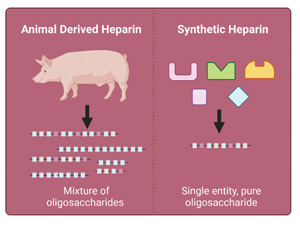
The firm has cracked the code and developed technology for industrial-scale non-animal-sourced synthetic heparin production. Applying its proprietary chemoenzymatic technology platform, it has invented novel heparan sulfate-based molecules that are quickly approaching the clinical stage. It also provides design, scale-up, and analysis of heparan sulfate and chondroitin sulfate molecules.
Through its chemoenzymatic synthesis, Glycan creates pure, structurally defined carbohydrate-based therapeutics, which was impossible before. It is a pioneer in creating sulfated oligosaccharides produced by enzymes for various applications in diverse fields, including hematology, neurobiology, Alzheimer’s, sepsis, infection, immunity, and more.
“We have developed molecules of high clinical significance with a hope to finally replace animal-extracted carbohydrate molecules with the synthetic molecules that we design and produce on a large scale,” says Vijayakanth Pagadala, chief operating officer.
Glycan is a one-stop shop for designing the specific structure clients want to synthesize, creating the synthetic process, and synthesizing the structural and analytical characterization of carbohydrate molecules. It has an extensive global clientele, including universities, pharmaceutical organizations, and clinical firms, which use its standards for research, analysis, and other applications.
Typically, the analysis and quantification or structural determination of heparan involves laborious tasks often affected by variations. Glycan’s platform makes structural analysis based on Mass Spectrometry feasible. To analyze GAGs qualitatively and quantitatively with high precision and accuracy, it provides Internally Calibrated Extraction Detection (ICED) technology.
Glycan offers three categories of services. One is its LC-MS-based characterization for quantifying heparan sulfate and chondroitin sulfate from biological specimens. Another service is the Glycan microarray, comprising a library of many complex carbohydrates, chondroitins, and heparins, which identifies potential interacting partners of any biomolecule of the researcher’s choice. Glycan Therapeutics is also the only company that makes 13C-labeled calibrants, which are spiked into samples during LC-MS/MS analysis to act as reference standards for fragmented disaccharides, tetrasaccharides units, or longer oligosaccharides.
The firm has carved a prominent position in the analytical services landscape through these unique capabilities. For instance, in the case of Heparan sulfate with a 3-O-sulfation modification, a very low abundance structural component believed to be critical for its biological activity, Glycan used its 13C-labeled 3-O-sulfated 8-mer calibrant Oligosaccharides. This, combined with the ICED platform’s identification and quantification, uncovered a 3-O-sulfation motif in the Alzheimer’s disease brain tissue. Glycan’s method demonstrated that a specific 3-O-sulfation HS domain is elevated in late-stage Alzheimer’s disease, providing a new molecular target, i.e., biomarker, to investigate the mechanism of the progression of AD.
As a further improvement of ICED, Glycan enhanced the sensitivity for quantifying heparan sulfate from biological samples, including histological samples, using a novel labeling reagent.
Glycan has offered similar LC-MS/MS analysis services for HS quantification to other universities and pharmaceutical and biotech companies.
We have developed molecules of high clinical significance with a hope to finally replace animal-extracted carbohydrate molecules with the synthetic molecules that we design and produce on a large scale
Glycan also supports an emerging clinical diagnostic company currently conducting global clinical trials for early cancer detection using an LC-MS-based diagnostic kit. Glycan is helping their efforts to improve the diagnostic kits by supplying them with critical reagents, reference standards, and technical advice to achieve the desired sensitivity and cost for their in-development diagnostic test.
Glycan, in its collaborative work with Prof Praveen Sethupathy’s group (Cornell University) using 13C -labeled heparan sulfate and chondroitin sulfate disaccharide internal standard and LC-MS/MS method, revealed a pathologic aberrancy in chondroitin (but not heparan) sulfate proteoglycans in fibrolamellar carcinoma. The findings have been published in the Journal of Cancer Research Communication 2: 663-678.
“While aiming to develop a cost-effective method to prepare synthetic heparin, we are preparing a wide range of homogeneous heparin oligosaccharide products for researchers to investigate their role in vascular biology, developmental biology, and infectious diseases,” says Zhangjie Wang, principal scientist.

Company
Glycan Therapeutics
Management
Zhangjie Wang, Principal Scientist
Description
Glycan Therapeutics possesses a unique patented technology to synthesize heparin and heparan sulfate oligosaccharides for medical uses. Glycan Therapeutics (GT) is developing new drug therapies based on a novel synthetic carbohydrate technology platform. The platform technology can be used to synthesize an anticoagulant drug, like synthetic heparin, as well as design heparin-like oligosaccharides for research and development for other medical applications. It is the leader in the development of enzymatically synthesized sulfated oligosaccharides for a variety of indications.