

THANK YOU FOR SUBSCRIBING

Pharma Tech Outlook Weekly Brief
Be first to read the latest tech news, Industry Leader's Insights, and CIO interviews of medium and large enterprises exclusively from Pharma Tech Outlook


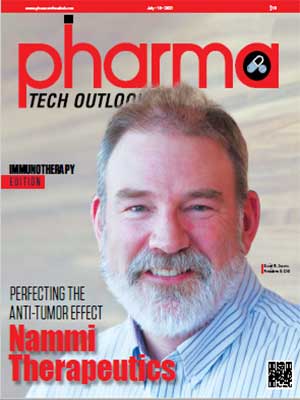
 David R. Stover, President & CEO
Veteran drug developer Dr. David R. Stover, with years of experience in both small molecule and biologics drug discovery and development, however, thought differently. While working with Professors Andre Nel and Huan Meng at UCLA on a nanoparticle drug delivery system, they were more focused on how they could better enhance the immune system to get a stronger anti-tumor activity without putting the patient’s life at risk. That was when they came upon the idea to combine active agents into a single drug where the physicochemical properties of the nanoparticle would allow those drugs to more selectively be delivered to the tumor. This stroke of genius gave birth to the Nammisome approach, which led to the beginning of the immunotherapy startup Nammi Therapeutics (Nammi) with Dr. Stover as the president and CEO.
“Nammi develops products that focus immune activation at the site of tumors sparing the life-changing side effects of systemic immune activation,” says Dr. Stover. Nammi is focused on finding the best way to deliver validated treatment mechanisms to tumors, making the agents tumor-selective, and landing on the best treatment combinations to have the most robust activity. The advantages come out two-fold as the Nammisome platform allows combinations of drugs to be added effectively to get even more activity without increasing the toxicity. This is especially important in developing new drugs as building synergistic combinations into a single therapy will help drugs have better single agent activity, allowing the process to be carried out in a much more rapid manner.
The other side of the coin to Nammi’s established immunotherapy platforms is the Masked ImmunoCytokines (MIC) method, which Dr. Sherie Morrison, Senior Scientific Advisor at Nammi Therapeutics, had originally worked on at Qwixel Therapeutics as its co-founders. A distinguished UCLA professor, Dr. Sherie had long been focused on antibody-cytokine fusion proteins and in making them activate the immune system while also having direct anti-tumor activity. While working with her, Stover observed that if fusion proteins are injected when not masked, the cytokine can activate immune cells in the blood. This results in a large number of toxic side effects, which limits the dosing. So, they added in a masking component, which blocked the cytokine’s ability to interact with its receptor in the circulating blood, allowing it to reach the tumor. The mask is cut off at the site of the tumor, allowing the cytokine to be activated only in the tumor environment.
The Power of Synergistic Combinations
With such innovative tools for activating the immune system and maintaining its function even in the suppressive environment of a tumor, Nammi has an optimal treatment strategy to avoid toxicity during systemic delivery of agents in an active form, especially in the combinations required for optimal efficacy.
Their strategy involves the presence of three critical components: a) synergistic combinations that can both activate and maintain anti-tumor immune functions, b) a mechanism for masking the activity of the immune modulation in circulation and normal tissues while allowing it to be activated within a tumor environment, and c) a mechanism for targeting the therapy at tumor sites.
Nammi develops products that focus immune activation at the site of tumors sparing the life-changing side effects of systemic immune activation
Nammi is unique in combining all the three key components into its therapies. For instance, the masked immunocytokines can employ interferons that have direct anti-tumor activity, anti-angiogenic properties, and induce both innate and adaptive immune responses. After using an inhibitory mask to block the activity of the interferon during circulation, then selectively releasing it within the tumor, the MICs can fuse the interferon to an antibody that targets a tumor antigen, thus enhancing the tumor exposure and activation mechanism. In the case of the Nammisomes, these can utilize validated immune-modulating agents that have been chosen to be optimally synergistic. Those agents can be incorporated as inactive lipid prodrugs within a lipid nanoparticle, so they do not interact with their targets in circulation, but are released by esterases after cellular uptake. This helps the agents to be issued selectively to the tumor by the enhanced permeability and retention (EPR) effect and/or by tumor-targeting molecules on the surface of the nanoparticle.
The Nammisomes and Masked ImmunoCytokines platforms, while quite distinct in design, are similar in concept—the synergistic combinations, the masking mechanism, and the activation and targeting mechanisms. The similarity in vision was what initially led Qwixel and Nammi to merge into one operating unit under the same roof, with both platforms contributing to Nammi’s finalized design of their lead product.
In terms of a direct combination of the MICs and the Nammisomes, the possibilities are infinite. Since both of these approaches target the tumor, albeit, in very different ways, they triangulate their efficacy on the tumor while in normal tissues their distribution will be distinct. This can prevent the synergistic toxicity that is sometimes seen with combinations, allowing for a synergistic efficacy within the tumor.
Honing in On Existing Mechanisms
For a long time, companies have continued to invest largely in identifying new immune mechanisms of action and agents that can modulate them. While Nammi acknowledges that these may be useful tools, they don’t believe that the major issue is a lack of validated mechanisms or the ‘right’ mechanism. With their three key strategies, Nammi wants to leverage these advances in the field and be better positioned to apply their concepts to truly improve patient outcomes.
As of now, two of Nammi’s products have been selected for preclinical development, the QXL138AM and the NTI-55. The QXL138AM is a masked immunocytokine targeting the tumor antigen, CD138, which is found at high levels in multiple myeloma and about 50 percent of all solid tumors, including the majority of colorectal, hepatic, breast, urothelial, renal, ovarian, and prostate cancers. The masking of the IFNα effectively blocks activation of IFNAR on blood cells but does not reduce the anti-tumor efficacy. Some companies are masking cytokines, or fusing them to antibodies, or using interferons that have both direct anti-tumor activity as well as immune-stimulating properties, but none are combining all three of these key strategies.
Despite facing all the COVID restrictions with its concomitant challenges, Nammi has been able to make steady progress with its product line. With the QXL138AM and the NTI-55 already in preclinical development and INDs scheduled, Nammi is on the lookout for partners to help co-develop and bring these to the market.
Go-to-Market Strategies
Now nearing their third anniversary, Nammi, as a therapeutics company, understands the service needs of a therapeutic startup in the immunotherapy field. It is generally not practical for most startups to have a vivarium, much less the sophisticated models required to evaluate immuno-oncology therapeutics in vivo. The company understands that having access to in vivo pharmacology with a wide selection of tumor models for evaluation of human tumors/human immune cells in vivo is of critical importance. To this end, Nammi works with immunotherapy agents with a wide variety of immune mechanisms of action. The company relies on vendors and services that provide validated tools for performing these assays at reasonable costs.
For Nammi, the opportunity for growth is abundant as the company aims to continue building out a pipeline of drugs using both of their existing platforms for future development. For instance, the MICs using IFNγ as the cytokine, promise even more robust efficacy. As IFNγ and IFNλ have different properties than the IFN-α, Nammi believes these will allow them to see efficacy in situations where perhaps IFN-α may not, thereby enabling them to tackle more types of cancers. On the other hand, for Nammisomes, Nammi is currently performing studies to find more of its synergistic combinations with other mechanisms of action, including TGF beta inhibitors, PD1 antagonists, IDO-1 inhibitors, and enhanced tumor targeting mechanisms.
Going forward, Nammi Therapeutics’ major push for expansion will be to ramp up a clinical team to plan and execute the studies that they are researching. However, the company believes that the validation they have on their current products should be of interest to pharma companies. This includes companies with a tumor-targeting antibody that Nammi can apply the MIC technology to, which will help them turn a suboptimal antibody therapeutic into a potent immunotherapy. Alternatively, a company with a small molecule that doesn’t have sufficient single-agent efficacy or bioavailability as a free molecule, could be incorporated into one of the Nammisomes as a prodrug and combined with other agents to provide a robust anti-tumor activity.
While their ability to focus the drug activity within the tumor is what makes Nammi unique, their strategy of finding different approaches to get the best activity out of the drugs is what pushes the company forward in the market. “When you are saving lives, the marketing does itself,” signs off Dr. Stover.

Company
Nammi Therapeutics
Management
David R. Stover, President & CEO
Description
Nammi Therapeutics aims to improve cancer care by co-delivering combinations of immunotherapy to tumor using proprietary technologies. Nammi’s nano-enabled approach utilizes a combination of drugs that act synergistically to switch on the immune response at the cancer site while also preventing immune escape. The company has developed two technology platforms, the Nammisomes and the Masked ImmunoCytokines, which, to which they apply their three key design features — synergistic combinations, masking mechanism, and activation and targeting mechanisms for optimal immunotherapies. The company is developing products that focus immune activation at the site of tumors, sparing the life-changing side effects of systemic immune activation


QXL138AM is a Masked Immunocytokine (MIC) comprised of a masked interferon alpha (IFNa) fused to an antibody that targets the CD138 protein on the surface of the tumor cells. Once QXL138AM binds to the tumor cell, proteases on the cell surface cleave the mask off of the IFNa allowing it to bind its receptor. Activation of the IFNa receptor complex induces direct killing of tumor cells in addition to activating innate and adaptive anti-tumor immunity. Preclinical data has demonstrated significant anti-tumor efficacy across more than 10 tumor types including multiple myeloma where complete regression at doses as low as 0.1 mg/kg have been observed. Nammi has secured Orphan Drug Designation in multiple myeloma from the FDA on the strength of this data.
"While the multiple myeloma field has greatly benefitted from development of bispecific and cell therapies, there unfortunately remains a significant need for novel therapeutics such as QXL138AM.", said David Stover, Ph.D., President and CEO of Nammi. "We are very excited to partner with MIF and the Multiple Myeloma Research Foundation (MMRF) and leverage their expertise to accelerate the development of QXL138AM. Together, we will work to realize the potential of this therapy to improve the lives of patients with multiple myeloma."
With this investment by MIF, Nammi anticipates the $30M Series B financing round will be fully subscribed upon its closing when the first patient has been treated with QXL138AM.
"Nammi's innovative technology and its application in multiple myeloma is an important step for the myeloma patient community," said Michael Andreini, President and CEO of the Multiple Myeloma Research Foundation. "Advancing new therapeutic options for patients is the most critical task-at-hand, so we are thrilled to support Nammi's Phase-1 trial to learn the potential of this exciting new immunotherapy approach."