
THANK YOU FOR SUBSCRIBING

Pharma Tech Outlook Weekly Brief
Be first to read the latest tech news, Industry Leader's Insights, and CIO interviews of medium and large enterprises exclusively from Pharma Tech Outlook


 Adam Sherlock, CEO
Turning pharmacovigilance (PV) from a reactive function into a strategic advantage has become a competitive necessity.
Qinecsa enables that transformation. With a singular focus on drug safety, it combines advanced technologies with expert human insight to help manage complexity, ensure compliance, and drive better outcomes across every stage of the product lifecycle.
The company offers an integrated technology platform that spans the full safety lifecycle, from case intake and processing to regulatory reporting, safety assessment, and signal detection. Unlike rigid, monolithic systems, Qinecsa’s best-of-breed approach allows clients to mix and match the components that best fit their unique needs.
Three Solutions, One Purpose
Qinecsa has developed three core technology solutions to support the broad spectrum of PV operations. The Reportum platform enables efficient management of both digital and analogue case reports, including initial and follow-up submissions from diverse global sources and in multiple languages. HaloPV, Qinecsa’s comprehensive drug safety system, oversees all aspects of multivigilance by covering both operational and scientific functions to ensure compliance and quality across the safety ecosystem. Complementing these is the Vigilance Workbench, which supports the end-to-end signal management process by enabling structured tracking, prioritisation, and scientific assessment of emerging safety signals.
Together, these interlocking solutions empower pharmaceutical companies to scale their PV capabilities while maintaining a balance between operational efficiency and scientific depth, regardless of size, geography, or stage in the product lifecycle.
“We offer our platform as a fully outsourced PV solution or as a standalone SaaS product, giving clients the flexibility to choose the model that best aligns with their goals and resources,” says Adam Sherlock, CEO.
Purpose-Built Services for Every Stage of the Drug Lifecycle
By maintaining an exclusive focus on PV, Qinecsa delivers safety functions for a wide range of clients. These include small biotech companies in early discovery and global biopharma organisations managing mature products across multiple markets. This hands-on involvement has enabled Qinecsa to build deep domain expertise in the daily execution of PV processes, a capability that clients consistently recognise and value.
To meet the diverse operational needs of these clients, the company operates through two flexible engagement models: functional service provision (FSP) and business process outsourcing (BPO). Under the FSP model, Qinecsa works directly within the client’s systems, integrating seamlessly into their workflows as an extension of their internal teams. In contrast, the BPO model delivers end-to-end PV services using Qinecsa’s proprietary technology platform, providing a turnkey solution for clients seeking complete outsourcing.
Both models are powered by a team of nearly 1,000 PV professionals based primarily in multiple locations across India. This decentralised structure ensures scalability, resilience, and continuity without reliance on a single facility or geography.
The scalable delivery framework gives clients confidence in both consistency and reach. But PV is not just about infrastructure or execution models. It is also about making informed, responsible decisions that directly impact patient safety.
While automation continues to evolve, the human element remains indispensable. To make transformation both meaningful and sustainable, organisations must strike the right balance between leveraging advanced tools and preserving critical human expertise.
Technologies such as robotic process automation (RPA) and natural language processing (NLP) are now enhancing efficiency, accuracy, and scalability in case intake, triage, reporting, and even the early stages of signal detection. However, Qinecsa does not view the future of PV as entirely touchless. While the industry often hears bold predictions of adverse events seamlessly moving through triage, processing, reporting, and signal detection without human intervention, that vision remains aspirational for now.
That is why, even as Qinecsa invests in automation, AI, and machine learning to streamline highly structured, repeatable tasks, its approach remains fundamentally different. The company believes that some aspects of drug safety cannot and should not be fully automated. By retaining a strong bench of scientific, medical, and data experts who apply their knowledge at key stages, Qinecsa ensures accurate interpretation and decision-making.
“Our philosophy at Qinecsa is pragmatic: automate what can be automated, but preserve critical human oversight where it matters most,” says Sherlock. “Clinical judgment, contextual analysis, and critical thinking by our trained professionals remain the foundation of patient safety.”
Validated by Regulators, Designed for the Real World
Qinecsa’s thoughtful balance of advanced technology and human intervention sets it apart. Across the PV ecosystem, its solutions are trusted by numerous clients. However, the most compelling validation of its approach is its successful adoption by regulatory authorities.
Unlike pharmaceutical companies that manage defined product portfolios, health authorities are responsible for monitoring the safety of all medicinal products within their jurisdiction. This often includes tens of thousands of products from multiple manufacturers, formulations, and markets. The scale, complexity, and variability they face are exponentially greater.
Despite this, regulators have implemented Qinecsa’s integrated solutions—spanning case processing, signal detection, and signal management—into their national or regional PV frameworks. Their ability to rely on Qinecsa’s systems in such high-stakes, high-volume environments demonstrates the scalability, adaptability, and scientific rigor of the company’s technology platform.
Ultimately, this underscores Qinecsa’s core strength: enabling clients to manage safety workloads at scale with precision, compliance, and clinical integrity.
In an industry where lives depend on the smallest details, PV cannot rely solely on automation or outdated systems that no longer meet the demands of modern drug safety. Qinecsa stands at the intersection of advanced technology and deep scientific expertise, delivering a smarter, more flexible way to manage risk and ensure patient well-being.
From first-in-human studies to decades-long post-market commitments, Qinecsa never compromises on safety, no matter how strong the headwinds.
Company
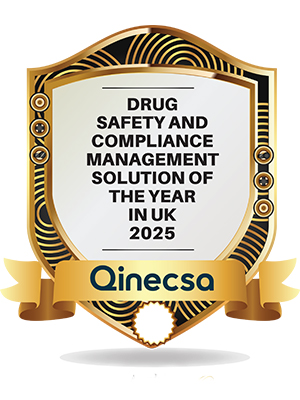
Qinecsa
Management
Adam Sherlock, CEO
Description
Qinecsa is a global leader in pharmacovigilance transformation – combining two decades of experience with a proprietary, flexible technology and service platform to deliver end-to-end drug safety solutions. With innovation at its core and patient safety as its benchmark, they help the world’s leading health authorities, pharmaceutical companies, and biotech pioneers reimagine how pharmacovigilance is done. As a single accountable partner, they close capability gaps, solve complex PV challenges, and set new standards in safety and performance.