
THANK YOU FOR SUBSCRIBING

Pharma Tech Outlook Weekly Brief
Be first to read the latest tech news, Industry Leader's Insights, and CIO interviews of medium and large enterprises exclusively from Pharma Tech Outlook


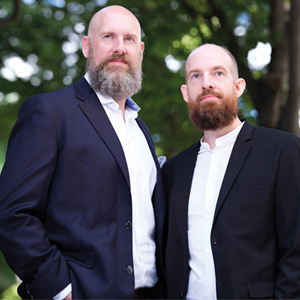 Rust Felix, CEO & Co-founder and Michael Felix, CTO & Co-founder
Slope addresses these challenges by bringing unprecedented order, trust, and predictability to the chaotic process of managing clinical supplies and valuable biosamples. As the provider of the world’s first eClinical Supply Chain Management (eCSCM) platform, Slope enhances clinical supply chain coordination and orchestration for sponsors and clinical research organizations (CROs) and significantly improves clinical supply inventory management for research sites.
“Slope’s eClinical Supply Chain Management platform is a game changer for Clinical Operations teams running logistically complex clinical studies. Our solution ensures that sites have what they need to enroll patients and conduct follow-up visits while guiding research staff through every step of the sample collection, storage, and shipment process,” says Rust Felix, Slope CEO and co-founder.
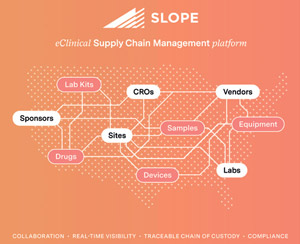
The Slope platform promotes collaboration between all clinical study stakeholders—trial sponsors, CROs, research sites, laboratories, clinical supply vendors, couriers, and biorepositories—helping everyone navigate increasingly complex clinical trial protocols. It provides unparalleled levels of real-time visibility into clinical supplies and samples, creates traceability of the chain of custody for efficient reconciliation, and facilitates adherence to clinical study protocols and compliance with federal regulations and best-practice guidance.
By designing, managing, and automating data- and demand-based supply chains for some of the most challenging clinical studies, Slope promotes optimal demand-based ordering of crucial clinical supplies to prevent shortages, avoid supply waste resulting from bulk orders, and ensure the clinical data integrity for clinical supplies and biological samples with fully traceable chain of custody for every step of the sample journey.
Combined, these features prevent delays, budget overruns, and compliance risks in clinical studies, and help speed up the evaluation process for new drugs and therapies so they make it to market faster. This ultimately benefits patients as drug development is expedited and disease treatments are enhanced.
An Inter-Industry Parallel
Slope’s stakeholder-centric, data-driven, patient-oriented approach to clinical trial supply chain management has its roots in the background of its founders, Rust Felix and Michael Felix, who serve as the CEO and CTO, respectively. They previously ran a predictive supply chain technology company that helped large e-commerce businesses better manage and load-balance their global supply chains.
From this experience and interactions with friends and family who worked in the clinical research industry, the co-founders noticed remarkable parallels between the supply chain challenges of both e-commerce and clinical research trials. They transferred their expertise in e-commerce supply chain management to the clinical trial domain to offer clinical study stakeholders the same collaboration, visibility, and traceability available to their e-commerce counterparts.
Helming a Digital Transformation in Clinical Operations
The Slope platform—which solves systemic clinical trial supply chain issues for any therapeutic area—is ideal for complex, sample-intensive, early-phase clinical studies. Oncology, rare disease, and gene therapy are three areas where Slope brings significant value. The Slope eCSCM platform takes into consideration and is optimized for the unique pain points and needs of each stakeholder.
 Hope Meely, Chief Clinical Officer
The platform offers a collaborative workspace with study-specific, guided workflows and processes for clinical trial supply procurement and shipping, inventory management, subject procedures, and biological sample collection, processing, shipping, and lab acknowledgment of receipt. It is configured specifically to each study protocol, which allows the platform to accurately determine the demand for specific supplies at a particular time, and place procurement requests accordingly or alert someone to place the order. This transforms the supply chain from an inefficient, people-driven entity to a proficient, demand-driven one. It reduces clinical supply waste due to bulk ordering and helps avoid inventory shortages at research sites.
By fostering stakeholder collaboration, Slope ensures each has real-time visibility over the clinical trial supply chain aspects pertinent to their role. With the platform’s excellent process and workflow control and data management abilities, stakeholders gain a holistic view of the supply inventories, past and scheduled subject procedures, and biological samples with real-time data on their location and status at each stage of trial execution.
These core capabilities of collaboration and visibility enable stakeholders to fully trace the chain of custody for each clinical supply and biological sample. This is particularly helpful when it is time for sample reconciliation. The platform centrally stores clinical supply and biological sample logistics data, where every sample sent to a lab or a biorepository is mapped to the trial subject, and lab kit or devices used to collect or test the sample. This helps trace suspected sample contamination within any of the used clinical supplies or answer any questions about the sample journey. A completely traceable chain of custody reduces wastage and delays in clinical trials, saves patients from spending time and effort in reappearing for testing, and ensures clinical integrity.
Through the Slope platform, stakeholders can easily request or dispatch supplies, track their status in transit, and determine the time of delivery of the items. This streamlines intercommunication between stakeholders and optimizes the study process, expediting clinical research.
For research sites, the platform elevates the procedural experience through a unique site-based workflow, which enables efficient management of highly complex clinical operations processes.Slope’s process control feature further helps site staff understand precisely what to do with the supplies and samples through a well-organized workflow.
A Perfect Blend of Skill Sets
The operational efficiencies afforded by Slope are best demonstrated by a use case involving a small biotechnology company. The company sought out Slope to automate the labor-intensive, manual process of tracking clinical samples and supplies and other important auxiliary supplies, such as saline. Slope gave the biotech much-needed visibility and traceability into their clinical study supply chain and inventory performance. The platform also automated their procurement process by setting up standard ordering procedures customized based on vendor status, expected delivery times, anticipated supply shortages, and any ongoing research site surpluses. This allowed the company to order only the exact amount they required to meet upcoming subject procedures and safety checks, reducing waste and costs.
Slope has achieved similar feats for numerous clients, propelled by the unique combination of its founders’ in-depth knowledge of supply chain management, predictive supply chain technology, and the robust clinical trial expertise of its ClinOps team. The team brings high levels of research competency and extensive clinical research site coordination experience to transform clinical trial operations for some of the most complex clinical studies.
Slope’s eClinical Supply Chain Management platform is a game changer for Clinical Operations teams running logistically complex clinical studies. Our solution ensures that sites have what they need to enroll patients and conduct follow-up visits while guiding research staff through every step of the sample collection, storage, and shipment process
“We are reinventing the way clinical operations and study execution are done for clinical research trials, especially those with complex, sample-intensive protocols,” says Hope Meely, Slope’s Chief Clinical Officer.
The Next Chapter of Growth
To bring further efficiencies to the clinical trial process, Slope has charted out its future growth in phases to support its mission to become the industry standard for clinical trial supply chain management. First, Slope made its inventory management capabilities available to clinical research sites for free—all they have to do is sign up and load in their inventory in a self-service model. Now Slope is focused on resolving supply chain issues for highly complex, early-phase studies. To accomplish this mission, Slope is optimizing the user experience and operational dashboards for each stakeholder and further expanding its use of automation, guided workflows, and predictive supply chain forecasting to streamline the clinical supply chain process. It will then be easy for the company to move into other areas of treatment and support the later stages of clinical trials.
Slope is also enhancing the capabilities of its platform, enabling research sites to track all of their biological samples independent of a study sponsor. This significant platform enhancement is slated to be launched at scale by year-end and rolled out in 2023. The enhanced platform will eradicate the research sites’ supply chain issues surrounding sample management, providing them a means to internally trace their outbound samples and aid their sample workflow process.
Slope is propelled by a vision to ease and elevate clinical trial supply chain management by collaborating with the stakeholders and is driven to deliver value to them at all touchpoints. The end result is the latest drugs and treatment practices reaching patients faster and with greater certainty, fostering better outcomes.
Company
Slope
Management
Rust Felix, CEO & Co-founder and Michael Felix, CTO & Co-founder and Hope Meely, Chief Clinical Officer
Description
Slope provides an online eClinical Supply Chain Management (eCSCM) platform for sponsors and research sites collaborating on complex, sample-intensive, early-phase clinical trials. The Slope 21 CFR Part 11-compliant eCSCM platform reduces clinical trial risks, reins in costs, improves the productivity of clinical trial collaborators, and increases subject retention.