
THANK YOU FOR SUBSCRIBING

Pharma Tech Outlook Weekly Brief
Be first to read the latest tech news, Industry Leader's Insights, and CIO interviews of medium and large enterprises exclusively from Pharma Tech Outlook
What if the very cure that researchers have been tirelessly pursuing was hidden within the biomolecule binding or antibody screening process—and went unnoticed? This isn’t a theoretical concern; it’s a common occurrence. The question is: why does it continue to happen? For decades, drug discovery has relied on screening millions of small molecules and antibody candidates for a breakthrough. To triage potential candidates, researchers rely on low-resolution techniques like fluorescent or radioactive-labeled assays only to get a yes/no answer or a relative binding score. While this process is systematic in nature, promising candidates with weak or fleeting binding often slip through the cracks, lost in the limitations of endpoint assays. Built on the foundational philosophy of better tools for better science, the biotech instrument company Carterra is changing this status quo. Through its purpose-built products—LSA®, LSAXT, and Ultra—the company is focused on minimizing the risk of false negatives, missed opportunities, and costly failures that derail drug discovery. Designed to deliver high-resolution, speed and throughput, these instruments enable realtime biomolecule binding to analyze interactions between potential drugs and their targets at an unprecedented scale. “Beyond expediting early-stage pharmaceutical discovery, our technologies remain valuable throughout the entire drug development process,” says Josh Eckman, CEO. Breaking Barriers to Drug Discovery Carterra’s large-scale multiplexing and microarray-based technologies offer a superior alternative to the 25-year-old conventional method where just 4 to 8 binding interactions were possible at a time. Researchers can now measure nearly 400 interactions simultaneously—a 50 to 100 times increase in speed, transforming what once took months into just days. They can capture every binding event in real time (just like an EKG readout), detecting even weak or transient interactions. The result is a full binding profile delivering deeper insights into molecular interactions, a significant advantage over simple yes/ no endpoint answers. Additionally, Carterra provides high-resolution insight into where each candidate binds. This understanding allows scientists and researchers to group candidates by binding site—essentially assigning them “zip codes”— to prioritize the most promising options while maintaining diversity by selecting a candidate from each group. Rather than discarding potentially viable drugs based on low-resolution binding affinity screens, researchers can now also select for binding location, or epitope, at the screening stage and then use existing technologies to enhance binding affinity.
The surge in smaller incubator biotech companies is a sign of increased funding and investments in exploring newer ways to treat diseases. Today, numerous independent biotechs have access to resources for discovering and developing game-changing molecules and biological products. However, the mushrooming of biotech firms—that primarily specialize in specific stages of a potentially transformative molecule’s journey to commercialization—brings the need for pharma and life sciences companies to collaborate with multiple partners to utilize their resources well and get the best return for their increased capital. Abzena is changing this narrative with its fully integrated end-to-end suite of services, spanning from early-stage drug design and lead selection to robust downstream development and clinical and commercial manufacturing for biotechs of all sizes. Unlike most competitors who may only offer select services across the development pathway, the company couples the full range of drug development services with deep-rooted scientific and technical expertise underpinned by extensive analytical and bioassay capabilities, all under a single organization, enabling them to rapidly progress customer programs from discovery to IND and beyond. “We holistically support our customers, turning their idea or sequence into a marketable product by fortifying crucial tasks like optimal drug design and characterization, investigational new drug (IND) submissions, and final product development and manufacturing activities,” says Matt Stober, CEO. Abzena excels in assisting small to mid-sized biotechs, generating the critical data needed to accelerate early phase studies and helping them achieve their next inflection point in their business trajectory. The company aims to positively impact the biotechnology and pharmaceutical sectors by creating holistic, value-added partnerships where all decisions align with a biotech’s financial expectations and future targets. “We like to work very closely with our customers to understand exactly what their goals are, what their inflection points are going to be, and what data they’re attempting to generate. Once we clearly understand their needs, we establish a business partnership that aligns with what they can commit to financially but also allows us to plan for the future to ensure their timelines are met,” shared Stober. Transforming innovative ideas into pioneering cancer treatments, Abzena specializes in antibody-drug conjugate (ADC) programs, with expertise in conjugation using custom linker technologies. Its proprietary ThioBridge™ platform is a novel technology for linking drugs to antibodies that uses site-specific conjugation to offer a consistent and stable drug-to-antibody ratio (DAR). This allows for better control of the pharmacokinetics (PK) and more flexibility in choosing the drug type and the linker. With over 20 years of experience, its seasoned team supports customers in unlocking new ADC formulations and improving their site-specific delivery with ThioBridge.


Professor Sir Peter Donnelly, Founder & CEO, Dave Thornton, President
At a time when predictive and precision medicine has moved from aspiration to critical importance, Genomics—a biotechnology research company—is driving the shift to make these advancements the new standard in healthcare and life sciences. Founded in Oxford and rapidly expanding to other key hubs like Cambridge, London and even overseas in the U.S., Genomics has become a frontrunner in the global quest to unlock the potential of genomics to help people live healthier, longer lives. Its advanced statistical analysis platform harnesses powerful algorithms and a vast genome-phenome database, providing pharmaceutical companies with critical insights into genetic variation and its connection to human diseases. Augmented with cutting-edge AI and ML tools, this platform delivers quick, deep analyses that identify diseases’ causes and consequences. By maintaining one of the world’s most comprehensive genotypephenotype databases, Genomics supports rapid and effective decision-making across all therapeutic areas, fundamentally enhancing drug R&D and the development of targeted, personalised treatments. Such robust infrastructure empowers it to drive significant medical breakthroughs and meet unmet medical needs effectively.
Drug Discovery Enabling

Steven Beales, Senior Vice President, Scientific and Regulatory, WCG
Pharma Manufacturing

Sherene Min, VP, Head of Clinical Development, ViiV Healthcare
Pharma Manufacturing

Alexis Bossie, Head of Media R&D, Lonza
Pharma Manufacturing

Armand Matejunas, Sr. Director, Clinical Data Operations, Pacira BioSciences, Inc
Drug Discovery Enabling

Jessica Wilson Rayse, Assoc Director of Product Management, Accugenix, Charles River Laboratories
Pharma Manufacturing

Gary Fling, CIO, Phibro Animal Health Corporation
Generic Drugs

Craig Hopkinson, M.D., EVP, Research and Development, CMO, Alkermes

Drug Discovery and Development
Safwan Kezbor, M.D., Global Medical Lead (Senior Medical Director), Clinical Development, Shionogi Inc

eClinical Trial Management
Haichen Yang, MD, MA, MBA, Vice President, Clinical Research, Amicus Therapeutics Inc [NASDAQ: FOLD]
Drug discovery is transforming, enabling companies like CROs and CDMOs to use advanced technologies to accelerate early-stage development, enhancing collaboration and innovation in bringing therapies to market faster.
The drug discovery enabling sector is crucial for developing new therapeutics, driven by technological advancements and the integration of AI, with projected market growth to $ 146.80 billion by 2030.
Next-Gen Infrastructure for Complex Drug Modalities
On the discovery front, companies are leveraging multi-omics platforms that combine genomics, transcriptomics, proteomics and metabolomics to gain a more comprehensive view of disease biology. This systems-level insight allows researchers to identify and validate drug targets more precisely, reducing false starts and accelerating early-stage breakthroughs.
As development accelerates, flexibility has emerged as a defining trait. Biopharma firms increasingly adopt modular service models from target validation to IND submission. These tailored, end-to-end solutions allow programs to scale with therapeutic focus and funding availability, without being locked into rigid development tracks.
Manufacturing is evolving just as rapidly. Contract manufacturing organizations (CMOs) are expanding their infrastructure to meet the demands of advanced therapies. With the rise of cell and gene therapies, mRNA platforms and highly specialized formulations, CMOs are moving beyond traditional production. Today’s facilities must accommodate smaller batch sizes, faster turnaround times and increasingly complex delivery formats.
This industry-wide transformation is reflected in projected growth. By 2030, the global drug discovery market is expected to reach $27.23 billion, while the contract manufacturing sector is set to hit $968.7 billion, with annual growth rates of 10.7 percent and 7.1 percent, respectively.
Together, these shifts mark a new era in which speed, precision and adaptability define success and collaboration across every stage is essential for transferring therapies from bench to bedside.
The magazine features thought leadership articles from Jessica Wilson Rayse, Associate Director of Product Management, Accugenix at Charles River Laboratories, highlighting how excellence in drug manufacturing relies on a strong microbiological foundation, where proactive environmental monitoring and tools like next-generation sequencing work together to protect patient safety. Safwan Kezbor, Global Medical Lead (Senior Medical Director), Clinical Development at Shionogi Inc., explores how rethinking First-In-Human study design and applying accelerated, data-driven strategies in early-phase development can shorten timelines.
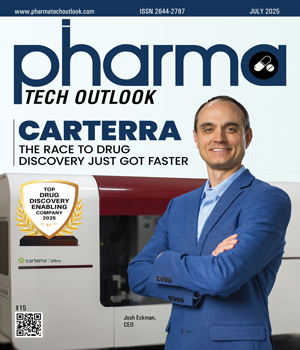
We also spotlight Carterra, a biotech tools company speeding up drug discovery by delivering high-resolution, real-time data that helps researchers uncover promising drug candidates faster and more accurately.
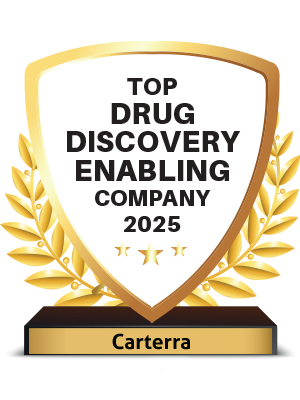
In this edition featuring the Top Drug Discovery Enabling Company 2025, Drug Discovery and Development Solutions Provider and Contract Manufacturing Organization we hope you find the right partner to meet your organization’s needs.