
THANK YOU FOR SUBSCRIBING

Pharma Tech Outlook Weekly Brief
Be first to read the latest tech news, Industry Leader's Insights, and CIO interviews of medium and large enterprises exclusively from Pharma Tech Outlook
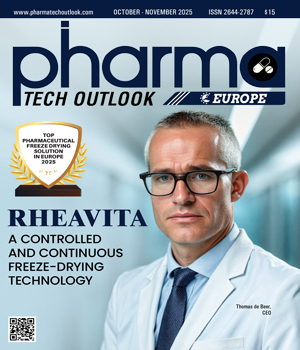
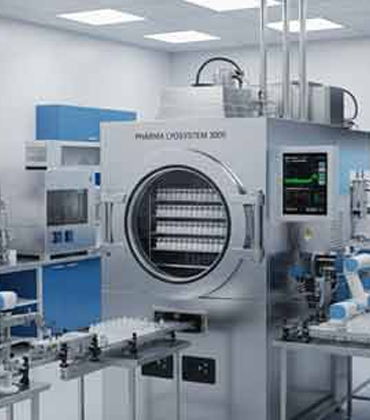
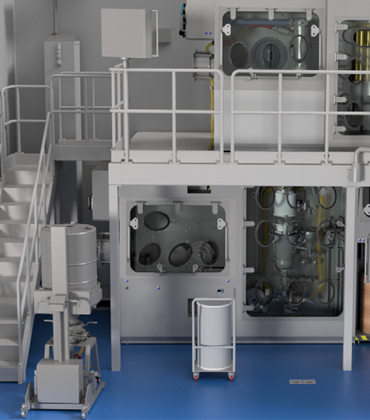
For decades, drugmakers have endured lyophilisation cycles that stretch out over a week. The process involved tying up equipment with long equilibration steps and batch-by-batch scheduling. That worked when medicines were produced in large lots. But the landscape has changed. Today’s therapies, like mRNA vaccines and complex biologics, are far more fragile and require flexible manufacturing in smaller batches. They require faster turnaround times and precise control to preserve product integrity. The old approach of waiting days for each cycle is no longer sustainable. RheaVita is addressing this challenge head-on with RheaLyo, its continuous freeze-drying system. Instead of treating it as a static, stop-start batch process, RheaLyo runs as a seamless, integrated cycle. “We believe every patient deserves timely access to safe, high-quality injectable medicines,” says Thomas de Beer, CEO. “With RheaLyo, the leap in speed and control turns that belief into practice.” How does it work? RheaLyo combines two innovations. Spin-freezing ensures uniform ice formation across vials. Real-time, non-contact monitoring gives manufacturers continuous individual product quality control. Together, these tools eliminate vial-to-vial variability. What once took days can now be completed in hours without compromising stability or reproducibility. For drugmakers, the payoff is clear; shorter time-to-market, fewer batch failures and confidence that every vial meets the same high standard. Patients gain access to life-saving medicines more quickly and in a more reliable supply. From Lab to Launch: Freeze-Drying Without the Disconnect One of the biggest bottlenecks in drug development has long been the handoff from formulation to manufacturing. A batch freeze-drying recipe designed in an R&D lab often falters when scaled for GMP production, forcing costly rework and sometimes compromising product integrity. For biologics and cell-based therapies, that disconnect is a barrier to timely patient access. RheaLyo technology resolves this by bringing uniformity and control to every stage of the process. As each vial spins on its axis, the liquid spreads into a thin, even layer. It is instantly frozen in a very controlled way with sterile cold gas, producing a consistently frozen structure that dries predictably. The cooling phase and the crystallisation phase can be programmed to the unique demands of each formulation, safeguarding fragile molecules. Once frozen, vials pass through a low-pressure tunnel where balanced infrared energy sublimates the ice. Product temperatures remain safely below collapse thresholds thanks to implemented automated control, protecting stability while dramatically accelerating throughput.
Today, drug safety is a strategic imperative, not just a regulatory checkbox. As products move from development to market, the pressure on safety teams never lets up. In early clinical trials, safety signals are scarce but nuanced, requiring deep analysis and rapid response. Post-approval, the landscape shifts: data volumes surge, global regulations diverge, and consistency becomes an uphill battle. Turning pharmacovigilance (PV) from a reactive function into a strategic advantage has become a competitive necessity. Qinecsa enables that transformation. With a singular focus on drug safety, it combines advanced technologies with expert human insight to help manage complexity, ensure compliance, and drive better outcomes across every stage of the product lifecycle. The company offers an integrated technology platform that spans the full safety lifecycle, from case intake and processing to regulatory reporting, safety assessment, and signal detection. Unlike rigid, monolithic systems, Qinecsa’s best-of-breed approach allows clients to mix and match the components that best fit their unique needs. Three Solutions, One Purpose Qinecsa has developed three core technology solutions to support the broad spectrum of PV operations. The Reportum platform enables efficient management of both digital and analogue case reports, including initial and follow-up submissions from diverse global sources and in multiple languages. HaloPV, Qinecsa’s comprehensive drug safety system, oversees all aspects of multivigilance by covering both operational and scientific functions to ensure compliance and quality across the safety ecosystem. Complementing these is the Vigilance Workbench, which supports the end-to-end signal management process by enabling structured tracking, prioritisation, and scientific assessment of emerging safety signals. Together, these interlocking solutions empower pharmaceutical companies to scale their PV capabilities while maintaining a balance between operational efficiency and scientific depth, regardless of size, geography, or stage in the product lifecycle. “We offer our platform as a fully outsourced PV solution or as a standalone SaaS product, giving clients the flexibility to choose the model that best aligns with their goals and resources,” says Adam Sherlock, CEO..

Mattia Wiedemeier, Commercial Director
When Schedio emerged to the forefront of particle engineering and high-containment systems amidst the onset of the pandemic, it was not just another new company on the block. It was a venture steeped in history and expertise. Having evolved as a spin-off from the engineering division of a distinguished CDMO, it aimed to expand its predecessor’s legacy of safety and quality in particle engineering while prioritising technological innovations. “Today, we see ourselves not just as equipment sellers but as partners in our clients’ production journeys. By actively enhancing production processes, offering troubleshooting, and optimising processes, we prioritise a more human-centered approach to offering our solutions,” says Mattia Wiedemeier, commercial director, articulating the company’s philosophy.
Pharma Manufacturing

Riikka Oksala, Director, Head of Integrated DMPK & Safety, R&D, Orion Corporation [HEL: ORNBV]
Pharma Manufacturing

Arnaud Lallouette, Executive Vice President Global Medical & Patient Affairs, Servier
Pharma Manufacturing
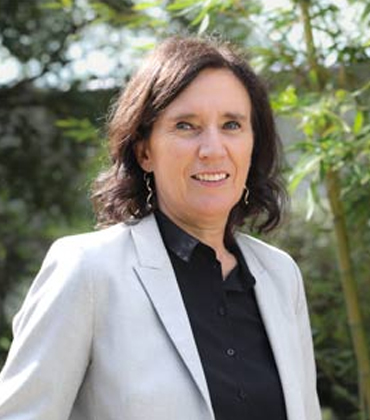
Veronique Kodjo, EVP Global Manufacturing, Supply Chain & Quality, Ceva Santé Animale
Pharma Manufacturing
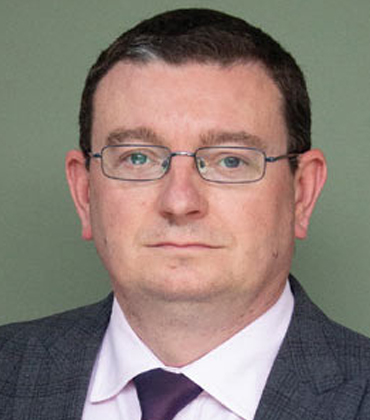
Nicholas Smalley, Vice President of Regulatory Affairs, Kindeva Drug Delivery
Pharma Manufacturing
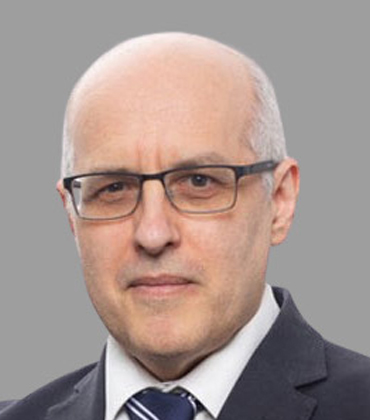
Stefano Biondi, VP of Pre-Clinical, Recordati S.p.A [BIT: REC]
Pharma Manufacturing
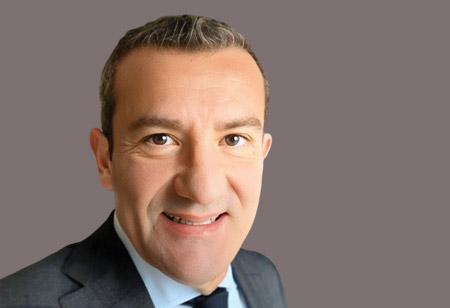
Piero Rijli, Corporate Director, Regulatory Activities and Market Access, MENARINI Group
Pharma Manufacturing
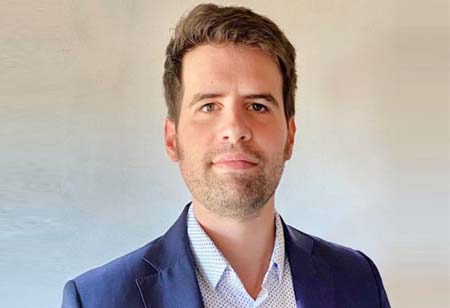
Xavier Salas, Head of Legal, Compliance and GRC, Neuraxpharm
The European pharmaceutical industry emphasises stringent regulations for drug safety, driven by collaboration, technological advancements.
The European healthcare system is transitioning to personalised medicine, utilising freeze-drying to produce stable, on-demand therapies that enhance the production and distribution of advanced treatments tailored to individual needs.
Europe’s Path to Smarter Pharma Operations
Drug safety and compliance management solutions play a vital role in ensuring consistent, reliable product safety and regulatory adherence. AI-driven monitoring and predictive analytics are emerging as key technologies, enabling proactive risk detection and streamlined regulatory reporting.
Meanwhile, advanced freeze-drying technologies are ensuring the stability of biologics and parenteral formulations. Digital twin simulations and real-time process control ensure uniform product stability and faster cycle times.
Pharma outsourcing enables organizations to streamline production by entrusting non-core functions, such as packaging, distribution, and compliance, to specialized partners. Cloud-based supply chain platforms and IoT-enabled tracking are driving smarter outsourcing, increasing transparency and operational agility.
Together, these strategies allow companies to scale operations while maintaining precision and reliability.
In this edition, we highlight influential companies like RheaVita, a pioneer in continuous pharmaceutical freeze-drying. Its RheaLyo system combines spin-freezing with real-time, non-contact monitoring, enabling operator-free, uniformly lyophilized samples in hours.
We also feature thought leaders such as Riikka Oksala, Director, Head of Integrated DMPK & Safety, R&D, Orion Corporation, and Véronique Kodjo, EVP of global manufacturing, supply chain & quality at Ceva Santé Animale. Their insights on dose-exposure-response, DMPK strategy and AI in manufacturing reflect how R&D and operations are evolving to improve prediction, speed and decision-making across the pharmaceutical lifecycle.
We hope this edition provides valuable insights into the technologies and visionaries shaping the future of pharma.