
THANK YOU FOR SUBSCRIBING

Pharma Tech Outlook Weekly Brief
Be first to read the latest tech news, Industry Leader's Insights, and CIO interviews of medium and large enterprises exclusively from Pharma Tech Outlook
A featured contribution from Leadership Perspectives: a curated forum reserved for leaders nominated by our subscribers and vetted by our Pharma Tech Outlook Advisory Board.

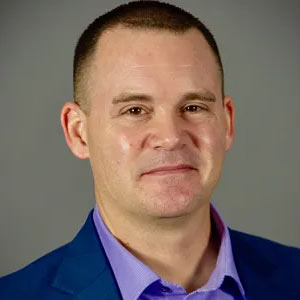
Brian Thoma completed his post-doctorate fellowship from MD Anderson Cancer Center in 2005. He began his journey in the biotechnology industry with QIAGEN in 2005 as a field service engineer repairing and troubleshooting the laboratory equipment that QIAGEN sells. In 2007 he moved into a leadership role within field service with increasing responsibilities over the years. Brian became the Director of Service Solutions North America for QIAGEN in 2017, responsible for post-sales support. Oversite in the role includes: telephone technical service, on-site field service, repair center depots, service contract sales and service administration for billing and invoicing.
According to you, what are the significant challenges that the pandemic brought in the biotech industry?
The pandemic has affected every industry, and the biotech industry is no different. Most companies experienced challenges with their supply chains, whether procuring raw materials, finished goods, or hiring new talent. It is more challenging to train the workforce as face-to-face interaction is not always possible. We have adapted to remote training where feasible, but it isn’t easy to deliver the same level of training to our employees. As is evident in daily news media, the topic of vaccinations is sensitive and often divisive. We are experiencing challenges serving our customers as an increasing number of customers require proof of the vaccination to enter sites and work on the equipment. QIAGEN is carefully considering how to navigate the intersections of personal liberty, business needs, customer requirements and our obligations as responsible members of society.
"Don’t wait for your next opportunity; start behaving like you already have it and act accordingly. Initiate and drive your own destiny"
Could you tell us about the projects that you are currently working on?
We are still dealing with multiple challenges coinciding with the pandemic, especially with talent recruitment. We are actively searching to recruit good-fit talent for QIAGEN as we believe we offer an exceptional work environment, culture, growth opportunity and benefits. From a training standpoint, we have embraced video conferencing and leveraging a hybrid model for preparing the workforce for the job. For example, we may send training systems to our trainees so they can gain hands-on experience with the equipment while the trainer directs them remotely. Though not as ideal as a traditional in-person training, it is more effective than just reading a service manual or having a completely hands-off experience. We are also investigating technologies such as artificial intelligence, augmented and virtual reality solutions to improve our operations and the support we provide to our customers. From the customer standpoint, we need to take a strategic approach that is appealing to them on a personal and emotional level. Engaging with clients in an empathetic way is crucial as they are experiencing similar pandemic challenges within their organization. Communication, accountability and transparency is more crucial than ever. Even unpleasant or disappointing news is preferred to no communication at all, as long as the commitment to a successful partnership is maintained.
With these potential disruptions and transformations, where is the industry heading?
Our target business groups are extremely diverse and include hospitals, clinics, basic research laboratories, forensics, food and environmental safety to name only a few. Our industry needs to intentionally lean into and invest in remote diagnostics and predictive analytics. The goal being to receive data from customers’ instruments automatically, allowing the anticipation of an instrument failure before clients inform us. Consequently, we can proactively reach out to clients and guide them to make the necessary adjustments to help mitigate a potential problem or schedule a visit before an actual failure occurs.
I believe trends such as artificial intelligence and augmented reality will be key to help us in moving forward and meeting our customers’ needs. These technologies will become crucial in training as the new workforce entering the industry has different ways of learning and engaging. QIAGEN has started down that path, working to change the way we deliver training and learning to our employees and technicians. To stay ahead in the race, we have to prepare our field workers for success by delivering training in a way that speaks to the way they learn.
What would be a piece of advice that you want to give for upcoming professionals to be successful in this field?
Grab your own opportunities! When you see a need—even if it is a need outside the area of your influence—speak up and make suggestions on how that issue can be resolved. Even if your solution isn’t right or feasible, most people will value your commitment and willingness to take a risk. Standing up, getting involved and sharing ideas make a difference. In essence, if you want your career to proceed in a particular direction, start behaving like you already have that responsibility and act accordingly; the opportunity will follow.
