
THANK YOU FOR SUBSCRIBING

Pharma Tech Outlook Weekly Brief
Be first to read the latest tech news, Industry Leader's Insights, and CIO interviews of medium and large enterprises exclusively from Pharma Tech Outlook
A featured contribution from Leadership Perspectives: a curated forum reserved for leaders nominated by our subscribers and vetted by our Pharma Tech Outlook Advisory Board.

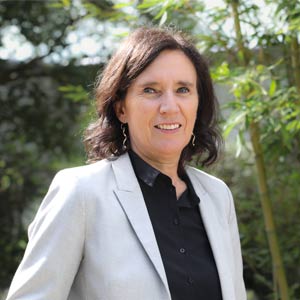
"Adopting AI is not just a trend; it's a pivotal shift in the pharmaceutical landscape. By harnessing its vast potential, we can revolutionize every facet of the industry—from streamlining manufacturing processes and elevating quality standards to accelerating drug discovery and personalizing patient care. This technological evolution is instrumental in delivering superior health outcomes and driving innovation that directly benefits both customers and patients."
Véronique Kodjo is at the forefront of integrating AI into the manufacturing division at Ceva Santé Animale, leading the charge as the EVP of Global Manufacturing, Supply Chain & Quality. Her global recognition stems from her profound expertise in biological and pharmaceutical operations, guiding a workforce of 2800 across 15 primary industrial sites and a vast external manufacturing network. Her leadership extends to overseeing Global Quality, EHS, industrialization, and engineering within the company. With a storied career that includes senior roles at Boehringer-Ingelheim Animal Health and Merial, a division of Sanofi, Véronique's insights are further enriched by her contributions as a Non-executive Board member at Nemera. Her academic credentials are equally impressive, holding a DVM from Ecole Nationale Vétérinaire de Lyon and an MSc in Business and Administration, complemented by executive training for Board Members. Véronique's strategic vision and innovative approach are instrumental in harnessing AI to elevate the pharmaceutical industry's operational excellence and product quality.
Could you briefly share your career journey in the industry and your current role and responsibilities?
Over the past thirty years, I have been immersed in the animal health industry, taking on various strategic roles that have honed my expertise in quality, industrial, and technical operations at global corporations such as Boehringer Ingelheim and Sanofi's animal health division. My experience extends beyond animal health, as I have also cultivated skills in sales and marketing within the human pharmaceutical sector.
My veterinary background affords me a distinctive and comprehensive viewpoint, enabling me to forge a pragmatic connection with customers and patients. This diverse array of experiences has equipped me with a multidimensional perspective, empowering me to lead with innovation and a profound understanding of the complex interplay between animal health products and their beneficiaries.
My dedication to excellence and my approach to adopting AI in manufacturing underline my commitment to propelling the pharmaceutical industry forward, ensuring that technological advancements are fully utilized to enhance product quality and patient care.
What are challenges or trends that have significantly impacted pharmaceutical manufacturing?
The pharmaceutical manufacturing industry has undergone significant transformations, particularly in the realm of biotechnology, catalyzed by the COVID-19 crisis. The industry has embraced innovative methods, such as mRNA vaccines, and ventured into new biotech territories. This evolution is propelled by the need for accelerated development and enhanced collaboration, prompting mergers and investments in cutting-edge technologies. Ceva's recent acquisition of a U.S. biotech firm specializing in gene therapy for pets is a prime example of this innovation, setting a new precedent in veterinary medicine. However, the abundance of technical advancements presents a challenge in identifying the most promising technologies from so many options. Companies need to align these technologies with their strategic objectives and outcomes, whilst keeping up with the swift advancement of technology and adhering to regulatory standards.
The integration of AI in pharmaceutical manufacturing marks another significant trend, revolutionizing quality control, automating tasks, and aiding in decision-making processes. AI's potential to boost efficiency, streamline operations, and refine execution is substantial, yet it still requires human oversight for validation.
The "One Health" concept is also gaining traction, emphasizing the interconnectedness of human and animal health. It is recognized that approximately 75 percent of emerging human diseases are zoonotic, originating from animals. By addressing animal diseases, particularly zoonotic ones, the industry can play a pivotal role in preventing the emergence of new diseases in humans, advocating for a holistic approach to healthcare.
These trends and challenges underscore the dynamic nature of pharmaceutical manufacturing and the critical role of innovation in shaping the future of the industry.
What are some of the leadership strategies for implementing and adopting AI in your organization?
In the face of rapid technological advancements, our leadership strategy for AI implementation and adoption is centered on agility, continuous learning, and adaptability. We adopt a 'test and learn' approach, utilizing proof of concepts and trials before broader application. This strategy is supported by our digital organization, early adopters, and manufacturing data science experts who rigorously test various tools available in the market.
To stay ahead, we recognize the need to attract talent with new skills in data science and biotechnology, and to integrate new companies that are embarking on this transformative journey. At Ceva, we prioritize external collaboration with universities, schools, and institutes to foster innovation and knowledge exchange. We also invest in developing collaborative tools and have established a strong community of trained, in-house facilitators to enhance collaboration and agility across the company
As the industry evolves, so too does the demand for new leadership skills. Leaders of tomorrow will need to be adept at adapting to change and guiding their teams through these transitions. In my leadership role, I focus on agility and adaptability, ensuring that our organization remains at the forefront of AI adoption and the broader digital transformation
What would be your advice to your fellow peers in the industry?
In offering guidance to my peers, I emphasize the importance of embracing every aspect of a project, including the moments that don't go as planned. These instances should not be seen as setbacks, but as chances to learn and evolve. Every experience, positive or negative, should be viewed as a step towards personal and professional enrichment.
In a rapidly changing world, resilience and adaptability are key. We must think creatively and be ready to revise our plans as needed. Instead of relying on a backup plan, we should focus on the ability to experiment, learn, and adapt. And in case you might fail, fail fast and course correct. This mindset promotes strategic thinking and preparedness, allowing us to effectively tackle unexpected challenges.
A passion for change is vital in this context. It drives us to learn from every experience, to stay resilient during tough times, and to think ahead strategically. This passion is what propels us to lead with agility and adaptability, ensuring we're always prepared to seize new opportunities for innovation and advancement.
