
THANK YOU FOR SUBSCRIBING

Pharma Tech Outlook Weekly Brief
Be first to read the latest tech news, Industry Leader's Insights, and CIO interviews of medium and large enterprises exclusively from Pharma Tech Outlook
A featured contribution from Leadership Perspectives: a curated forum reserved for leaders nominated by our subscribers and vetted by our Pharma Tech Outlook Advisory Board.

With an expertise in R&D, project management, and business development, Kinga Bercsenyi is a life science expert with a special focus on oncology and immuno-oncology. Her dual role as a scientist and business development consultant requires her to establish strategic partnerships with top pharmaceutical companies and focus on gathering as much meaningful information as she can about research, support, and the capacity to plan clinical trials to help with the development of patient-specific medications.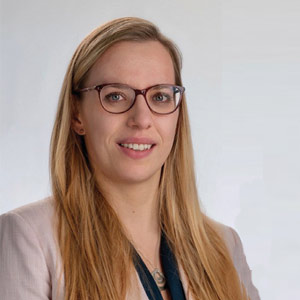
Kinga Bercsenyi
I'm curious about the market's present state from your viewpoint given the level of experience you've gained over the years. What do you think are some of the most pressing issues currently?
Patient recruitment for studies has been extremely difficult due to COVID and the global pandemic. Decentralized studies have been encouraged by it, so patients are no longer required to attend all of their visits in the clinic. It's fascinating to see how they're attempting to shift healthcare towards a more at-home and portable model. And in parallel with this, we also had a huge evolution in technology. When you consider the human genome's sequencing, it cost millions of dollars and ten years to complete a single sequence. Nowadays, we can do it for $1,000 in essentially one day, which is amazing. Another challenge in precision medicine is to effectively synchronise the high throughput data that we are currently obtaining, understand how to best position artificial intelligence, while also still maintaining some level of human control over it so that we get meaningful results and real-world evidence. There are many obstacles, but there is the technology and will to overcome them.
What have been the most recent changes or trends in the market, in your opinion?
In immuno-oncology, we are nearing a point where we can truly identify individuals who would benefit from certain targeted medicines using sophisticated biomarkers. Particularly, the CAR T - cells industry is experiencing an incredible boom and the other one that I would highlight is the speed in which the COVID vaccine was developed. It's very tough to be flexible when launching new medications, but due to the unprecedented need, we now know that there is a way to produce therapeutics and vaccines in 1/5th of the previously possible time. From a technology standpoint, high throughput devices are now accessible for sequencing, proteomics, and also merging the various readouts. So, these would be the latest developments.
Is there a particular project that you're working on lately? We would like to know the latest product initiative that you've been working on, wherein you've been implementing some of these latest trends to make that successful?
At a higher level, the CAR T field is incredibly interesting and at the fore of promoting endeavours. A decade ago, CAR T cost a significant amount of money to develop. We must stop using the patient's own immune cells and instead employ CAR T- cells that are all generic and are available off the shelf in order to lower the cost and make the therapy more widely available. Consequently, we don't have to rely on logistics and the supply chain when someone is diagnosed with cancer. Instead, we may treat these patients using CAR T- cells that are readily available off the shelf. It would also be accessible in the developing world, which is a pretty exciting possibility. Cerba Research has a significant presence in Africa and a firm commitment to social responsibility. Reducing the time between diagnosis and treatment is also essential since cancer is a ticking time bomb. The sooner you begin therapy, the less chance there is that it will have time and room to metastasize. These tailored medications should soon be offered off the shelf at lower prices everywhere, reaching even those in distant areas of the world. I'm therefore actively supporting and pursuing this.
“Once people have an early diagnosis, we will be able to provide them increasingly specific and individualised treatments, for better treatment outcomes, increased likelihood of a cure, and less side effects"
With all these potential upheavals and transformations taking place, how do you envision the next couple of years?
I believe that we will use wearable technology to remotely monitor our health, which will eventually lead to earlier diagnosis. Hence, there will be more awareness for self assessments. For the breast cancer awareness in the UK, we have a public-facing programme to encourage people to routinely check their breasts in order to find out if anything is wrong. So, wearable devices are the big important factors. Over time, all of these factors will add up, and the world's population will become healthier. Of course, we need more access to these technologies everywhere. Once people have an early diagnosis, we will be able to provide them increasingly specific and individualised treatments, for better treatment outcomes, increased likelihood of a cure, and less side effects. The other big factor is artificial intelligence, because who knows, within the next five years, maybe my phone will be able to predict if I was going to have a heart attack. The key, in my opinion, is prevention, and if that is not possible, then early diagnosis. After it is diagnosed, targeted and personalized treatments can be used as much as possible which should be sustainable and available to everybody.
It would be amazing if you could give advice to your industry peers on how they can be successful. Or how should they approach this sector?
I think having an optimistic attitude is always a good thought and working as a team is fundamentally important, because we are really getting into a space where one expert is no expert. One should look for a position in a company and in a team that is with them on the journey and doing something that they think will make an impact in whatever they are passionate about. These are the kinds of basic values I live by. So, that's the advice I would give.
